
A 3-year-old gripping a child-sized club is not trying to perfect a swing plane. They are learning how to balance, listen, reach, turn, and try again with a trusted grown-up close by. That is why parent child golf classes can be such a strong fit for early childhood. When the experience is built around purposeful play and shared participation, golf becomes more than a sport lesson. It becomes a structured way to support confidence, coordination, and connection.
For many families, that difference matters. Parents are not just looking for something to fill an hour in the week. They want an activity that feels age-appropriate, well guided, and genuinely useful for their child’s development. The best early years programs meet children where they are, rather than asking them to perform beyond their stage.
What makes parent child golf classes different
Traditional sports instruction often assumes a child can separate from a parent, follow multi-step directions, wait through longer explanations, and repeat technical movements on command. That can be a poor match for children ages 2 to 5. At this stage, learning is physical, emotional, and social all at once.
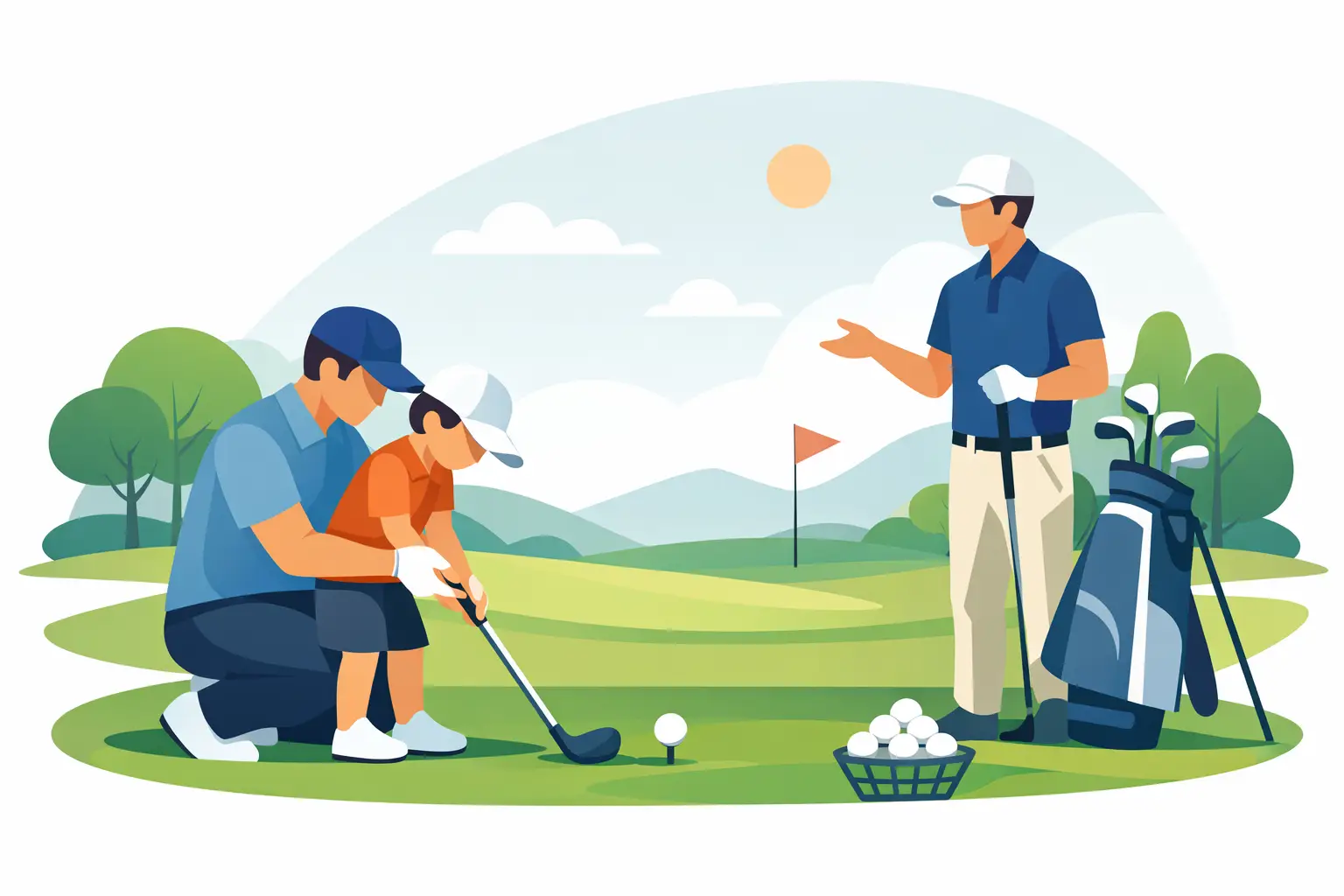
Parent child golf classes work differently because the parent is part of the process, not just watching from the side. A familiar adult helps the child feel secure enough to explore. That security often leads to better participation, especially for children who are cautious in new environments or slow to warm up.
This structure also changes the goal. Instead of chasing polished golf mechanics, the focus shifts to foundational skills. A child may be practicing how to hold an object with control, rotate their body, follow a visual target, or move from one activity station to another. Those are meaningful building blocks, and they support far more than golf.
Why ages 2 to 5 need a different approach
Early childhood is a stage of rapid development, but it is rarely linear. One week a child is eager, chatty, and ready to try everything. The next week they may cling, wander, or lose interest quickly. That does not mean the class is failing. It means the program needs to be designed around how young children actually learn.
A development-led class keeps expectations realistic. Short activities, clear routines, playful repetition, and lots of encouragement tend to work better than long instruction. Children in this age group learn through doing. They respond to rhythm, imitation, movement, and simple success experiences.
That is where golf can be surprisingly effective. Rolling a ball toward a target, carrying equipment safely, taking turns, and swinging with both hands on a club all involve coordination and body awareness. When introduced in a playful format, these tasks help children practice focus without feeling pressured.
The developmental benefits parents often notice first
Confidence is usually one of the earliest changes families see. Young children grow when they are given manageable challenges and the chance to repeat them. Hitting a ball, aiming for a target, or completing a simple activity station may seem small to an adult, but to a young child, those moments matter. Success builds willingness. Willingness builds confidence.
Coordination is another major benefit. Good parent child golf classes ask children to cross the midline, shift weight, stabilize their core, and track moving objects with their eyes. Those are big developmental tasks disguised as fun. Children are not just learning a golf action. They are learning how their bodies move through space.
Parents also often notice improved listening and transition skills. In a structured class, children practice stopping, starting, waiting briefly, and responding to simple cues. Not every child picks this up at the same speed, and that is normal. Still, repeated exposure to predictable routines can support attention and self-regulation over time.
Then there is the parent-child bond itself. Shared activities create a strong emotional context for learning. When a child sees a parent encouraging, modeling, and celebrating effort, the experience feels safe and meaningful. That shared joy is not an extra benefit. For many families, it is one of the main reasons the class works.
What to look for in a quality parent child golf program
Not every class with a club and a ball is truly designed for young children. The quality of the structure matters. A strong program should be clearly built around early childhood development, not simply a scaled-down version of older kids’ coaching.
Look first at the role of the parent. In a true parent-child format, adults are guided on how to participate, not left to guess. They should know when to model, when to encourage, and when to step back. That support helps parents feel confident too, especially if they have no golf background.
It also helps to look at how the activities are organized. Young children benefit from variety, but not chaos. The best classes have a calm, predictable flow with short segments that keep children engaged without overwhelming them. If everything depends on standing still and listening for long stretches, it may not be the right fit for this age.
Age-appropriate equipment is another sign of a thoughtful program. Clubs, targets, and task setups should match small bodies and beginner abilities. When the tools are scaled correctly, children can experience success earlier, and that changes how they feel about participating.
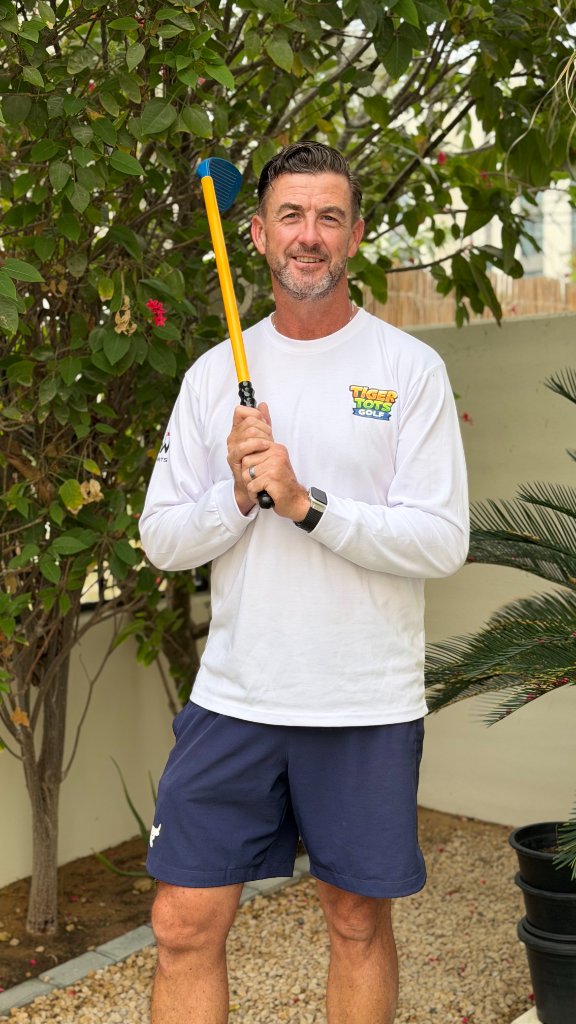
Programs like TigerTOTS Golf are built around this kind of structure, where purposeful play and parental participation support development from the start rather than treating them as secondary benefits.
Why golf works well as purposeful play
Some parents are surprised that golf can be such a strong early years activity. They may picture a quiet course, strict rules, and lots of technical language. For young children, though, golf can be introduced in a very different way.
At this stage, golf provides simple, adaptable movement patterns. Children can roll, tap, carry, aim, and swing in ways that feel achievable. A good class uses those patterns to strengthen motor skills while keeping the experience light and enjoyable.
There is also a natural balance in golf between movement and control. Children get to be active, but they also practice slowing down enough to aim, take a turn, or follow a direction. That balance can be especially helpful for preschoolers who need both outlets for energy and opportunities to build focus.
Still, it depends on how the class is taught. If the session becomes too technical too soon, many young children will lose interest. If it is all free play with no guidance, parents may not see meaningful progress. The sweet spot is structured play - enough direction to support growth, enough flexibility to keep the child engaged.
How parents can help their child get the most from class
Children do best when adults come in with the right expectations. A successful session does not always mean your child follows every instruction or completes every activity perfectly. Sometimes success looks like joining the warm-up after a hesitant start. Sometimes it is staying engaged for five more minutes than last week.
It helps to focus on participation over performance. Praise effort, curiosity, and persistence. If your child misses the ball ten times and laughs through it, that can still be a productive class. Early confidence grows faster when children feel free to try without fear of getting it wrong.
Consistency matters too. Young children often need repeated exposure before they feel fully comfortable. A first class might feel new and unpredictable. By the third or fourth session, many children begin to understand the routine and show much more of what they can do.
Parents can also extend the experience at home in simple ways. Rolling balls to targets, practicing gentle turns with a club, or playing follow-the-leader movement games can reinforce what happens in class. It does not need to be long or formal. A few playful minutes can go a long way.
When parent child golf classes are the right fit
These classes are especially valuable for families who want more than entertainment. If you are looking for an activity that supports motor development, emotional security, listening skills, and quality time together, this format makes a lot of sense. It can also be a reassuring starting point for children who are not yet ready for fully independent classes.
That said, every child is different. Some children love the structure right away. Others need time to settle in. Some are drawn to the equipment immediately, while others connect first with the songs, games, or routine. A good program leaves room for those differences without losing its shape.
The real value of early sports experiences is not in creating tiny experts. It is in helping children feel capable in their bodies, connected to their parent, and excited to learn. When a class does that well, the club and ball are only part of the story.
A young child may not remember every activity they did in class, but they will remember how it felt to try, to move, and to be encouraged by someone they trust. That feeling is often where lifelong confidence begins.