
A toddler holding a child-sized club is not trying to perfect a swing. They may be practicing balance, learning to take turns, or feeling proud that they rolled a ball toward a target. That is why the question of when should kids start golf is less about finding the “right” age on a calendar and more about finding the right kind of first experience.
For many children, ages 2 to 5 can be a wonderful time to begin golf-inspired play. At this stage, the goal is not formal instruction, scorecards, or long practice sessions. It is helping children move with confidence, explore new skills, and enjoy focused time with a parent or caregiver.
When Should Kids Start Golf? Look for Readiness, Not Perfection
Children develop at different rates. One 2-year-old may happily copy a simple putting motion, while another may prefer to carry balls, choose colors, and watch for a while. Both are participating in meaningful ways.
A child may be ready for an introduction to golf when they can comfortably join short, guided activities with an adult nearby. They do not need to know how to grip a club, follow every instruction, or stay focused for an extended period. In fact, expecting those things too early can make a promising activity feel like work.
Instead, look for small signs of readiness: curiosity about balls or sports equipment, enjoyment of outdoor play, a willingness to copy simple movements, or excitement about doing something alongside a parent. A child who is still developing these skills does not need to wait. They simply need an approach built around exploration rather than performance.
For preschoolers, golf can become a useful setting for practicing body awareness. Reaching, rolling, balancing, aiming, and gently swinging all invite children to coordinate their eyes, hands, and whole body. These are foundational skills that support many forms of play and movement, not just golf.
Why Ages 2 to 5 Are About Foundations
Early childhood is a period of rapid physical, emotional, and social growth. Children are learning what their bodies can do, how to respond when something feels challenging, and how to share experiences with others. A well-designed early golf program meets them at that level.
A short putting game, for example, may help a child learn to control force. A target activity can encourage visual tracking and concentration. Taking turns with a parent or another child creates gentle practice in patience and communication. When a child tries again after missing a target, they begin to experience resilience in a safe, low-pressure way.
The trade-off is that young children are not ready for a traditional golf lesson built around technical corrections and repetition. Their attention spans are still growing, and their movement patterns are naturally variable. Asking a 3-year-old to repeat the same swing ten times may lead to frustration. Offering a playful challenge, celebrating effort, and changing the activity when attention shifts is much more effective.
This is why purposeful play matters. Play is not a break from learning for young children. It is how much of their learning happens.
What a Great First Golf Experience Looks Like
A child’s first golf experience should feel inviting, active, and achievable. Equipment should be appropriately sized and lightweight, and activities should be adapted to the child rather than the other way around. A large target close by is more motivating than a tiny hole far away.
The best sessions also leave room for imagination. A child might pretend a ball is traveling to a “home,” choose which target to aim for, or celebrate a successful roll with a high-five. These small moments build ownership and enjoyment.
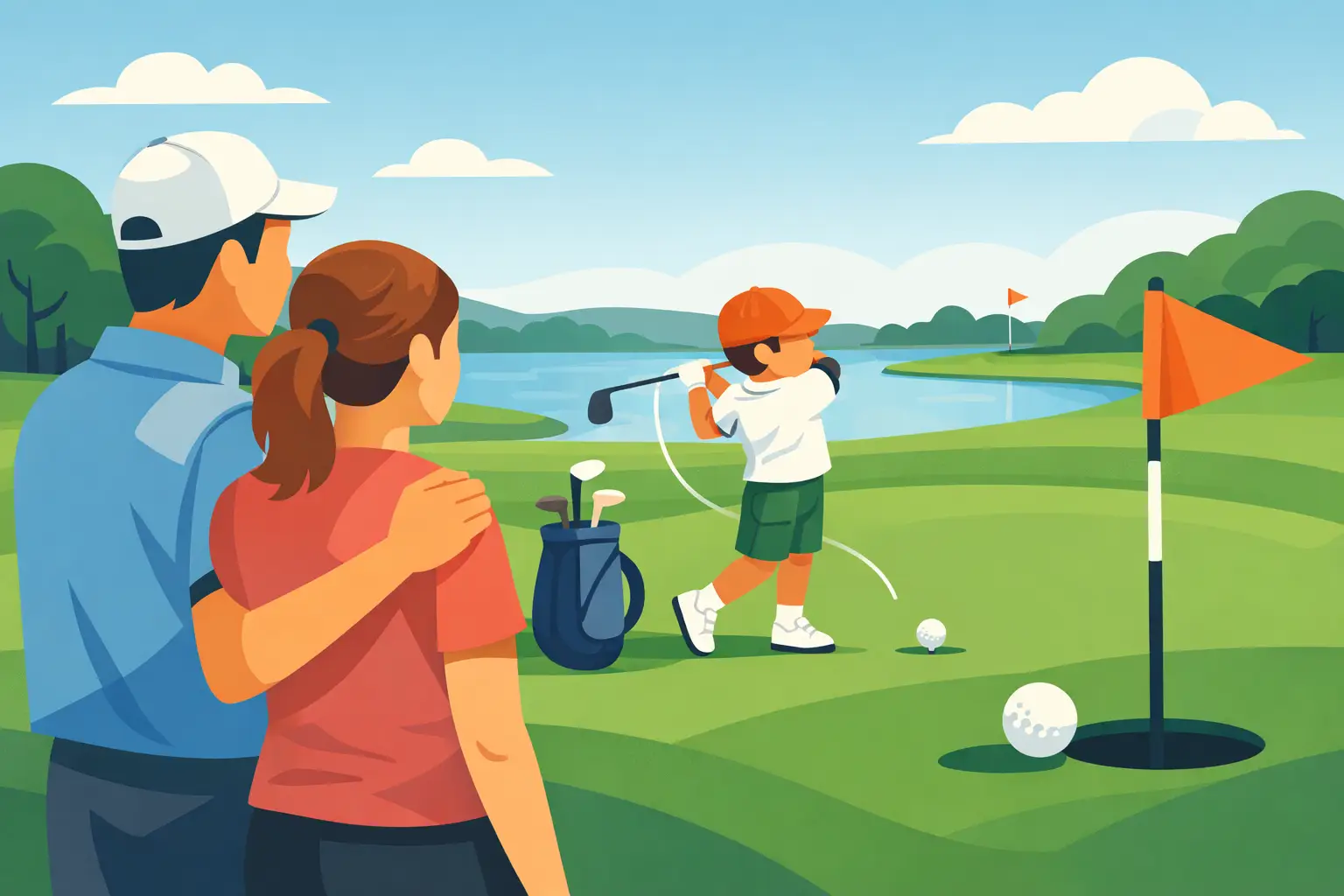
Parent participation is especially valuable at this age. A familiar adult can demonstrate an activity, offer encouragement, and help a child feel secure in a new environment. Children often learn by watching first, then trying when they feel ready. Sharing the experience also turns the class into meaningful family time rather than one more item on a busy schedule.
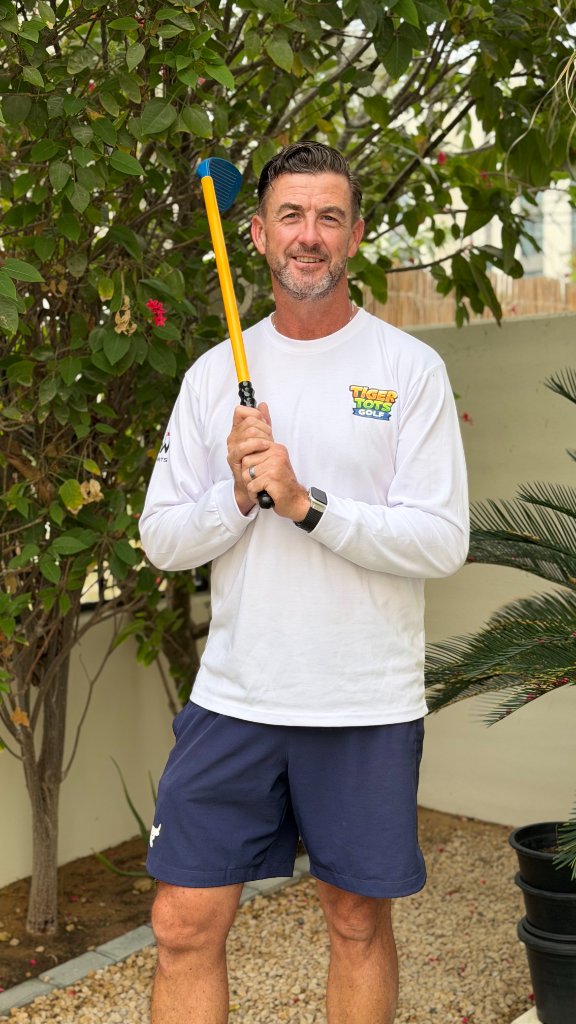
At TigerTOTS Golf, the focus is on this development-first approach: using age-appropriate golf activities to support confidence, coordination, and core motor skills through parent-child participation.
How Often Should Young Children Practice?
For children ages 2 to 5, short and positive is better than frequent and demanding. A few minutes of playful movement at home can be plenty, especially after a class or family outing. The goal is to keep the connection with golf happy, not to create a practice obligation.
Try a simple rolling or putting game in a clear, safe space. Use a soft ball, make a target from a cup or cone, and let your child set the distance. Some days they may want to play for ten minutes. On other days, they may roll one ball and move on. That is normal.
Consistency can still be helpful, but it should look like a routine of shared play rather than a strict training plan. A child who associates golf with encouragement, movement, and time with a parent is more likely to stay interested as they grow.
Safety and Equipment Matter More Than Distance
Young children should always use equipment designed for their size and stage. Adult clubs can be heavy, awkward, and difficult to control. A lightweight, child-friendly club or a safe substitute for early movement games helps children explore without being overwhelmed.
Supervision is essential. Children should learn simple habits from the beginning: keep a safe distance when someone is swinging, wait until it is their turn, and place equipment down carefully. These lessons can be taught calmly through routine rather than warnings that make the activity feel intimidating.
Choose open spaces with few distractions and clear boundaries. A backyard, indoor activity area, or structured class setting can work well. The best location is not necessarily a golf course. For a young child, a safe place to roll, aim, move, and laugh is enough.
Signs Your Child May Need a Different Pace
Starting early does not mean pushing through every difficult day. If your child regularly becomes upset, avoids the activity, or seems overwhelmed by the environment, it may be time to simplify. Shorten the session, remove the expectation to use a club, or focus on a related movement activity such as rolling a ball to a target.
Some children also need more time to become comfortable in a group. Observing from a parent’s side, joining only part of an activity, or repeating familiar games can help build trust. Progress may look quiet at first: carrying equipment, watching another child, or agreeing to try one turn. Those are real steps forward.
It is also worth remembering that interest can come and go. A child who loves a game one week may ignore it the next. Early childhood development is not linear, and neither is a child’s relationship with sport. Stay responsive rather than measuring success by constant enthusiasm.
Golf Skills Can Wait. Confidence Should Not.
Parents sometimes worry that starting with playful activities means a child will miss out on “real” golf skills. In reality, a child who develops balance, coordination, listening skills, and a willingness to try is building a strong base for future learning. Technical instruction becomes more meaningful when children have the physical and emotional readiness to receive it.
A positive start also protects something valuable: a child’s sense that movement is enjoyable. When a young child hears encouragement for trying, learns that mistakes are part of the game, and feels connected to their parent during play, golf becomes more than a sport. It becomes a place where they can grow.
If your child is curious, comfortable with simple guided play, and ready to explore alongside you, there is no need to wait for a perfect swing. Offer a soft start, notice the small wins, and let their confidence lead the way.