A parent sees it in an instant - the first confident jump off a low step, the run that suddenly looks smoother, the swing of a child-sized club that uses the whole body instead of just the hands. If you have ever wondered what is an example of gross motor skill development in early childhood, the short answer is this: any movement that uses the large muscles of the arms, legs, and core in a more coordinated way.
Gross motor development is not only about big movement. It is about control, timing, balance, and body awareness. When a young child learns to hop, throw, climb, or turn their body to strike a ball, they are building the physical foundation that supports sports, playground play, classroom readiness, and everyday confidence.
What is an example of gross motor skill development in early childhood?
A simple example is jumping with two feet off the ground and landing with balance. That might look small to an adult, but for a young child it is a major developmental step. It requires leg strength, core stability, coordination, and the ability to control the body through movement and impact.
Other strong examples include running without frequent falls, kicking a ball with direction, climbing stairs by alternating feet, balancing briefly on one foot, and swinging an object with both control and intention. In early childhood, these skills usually develop through repetition, play, and guided practice rather than formal drills.
This is one reason purposeful movement activities matter so much. A child who chases a ball, squats to pick it up, carries it back, and tries again is doing far more than playing. They are learning how their body moves in space.
Why gross motor skills matter beyond physical activity
Parents often notice gross motor milestones because they are easy to see. You can watch a child run faster or jump farther. What is less obvious is how much these skills support other areas of development.
When children strengthen their large muscle groups, they often gain better posture, better balance, and more confidence trying new tasks. Gross motor control can also support attention and self-regulation. A child who feels physically steady is often more comfortable participating in group activities, exploring new environments, and managing transitions.
There is also an emotional side to it. Young children build confidence through doing. When they learn that they can step over an obstacle, swing at a target, or move from one station to the next on their own, they start to trust their bodies. That sense of "I can do this" carries into many other learning experiences.
How gross motor skills develop in real life
Gross motor development does not follow one perfect path. Two children the same age may show strength in different areas. One may be an eager climber but hesitant with ball skills. Another may run confidently but need more time to balance on one foot. That variation is normal.
What matters most is steady progress, not perfect performance. Early childhood development tends to build from simpler movements to more coordinated ones. A child first learns to stand steadily, then walk, then run, then change speed and direction. In the same way, a child may first roll a ball, then toss it, then throw it with more aim and body control.
Practice also works best when it feels playful. Young children are rarely motivated by correction-heavy instruction. They learn more naturally when movement is built into games, obstacle courses, pretend play, and simple parent-child activities.
What gross motor skill development can look like by age
While every child develops at their own pace, there are some common patterns in early childhood. Around age 2, many children are learning to walk more steadily, begin to run, kick a ball, and climb onto low surfaces. By age 3, they may jump with two feet, pedal a tricycle, and move with better coordination during play.
Around ages 4 and 5, gross motor movements often become more refined. Children may hop, skip attempts begin, balance improves, and they can start combining multiple actions together, such as running to a ball, stopping, and swinging at it. This is where structured movement experiences can be especially helpful because children are ready for activities that ask for sequencing, control, and attention.
It is useful to remember that ability in one area does not guarantee ability in another. A child may be physically active but still need support with rotational movement, balance, or crossing the midline. That is why varied movement matters.
What is an example of gross motor skill development in early childhood through play?
Imagine a child placing a ball on a tee, turning their shoulders, swinging, and following through. That one playful action involves balance, coordination, core engagement, arm control, and spatial awareness. Even if the contact is inconsistent, the developmental value is still there.
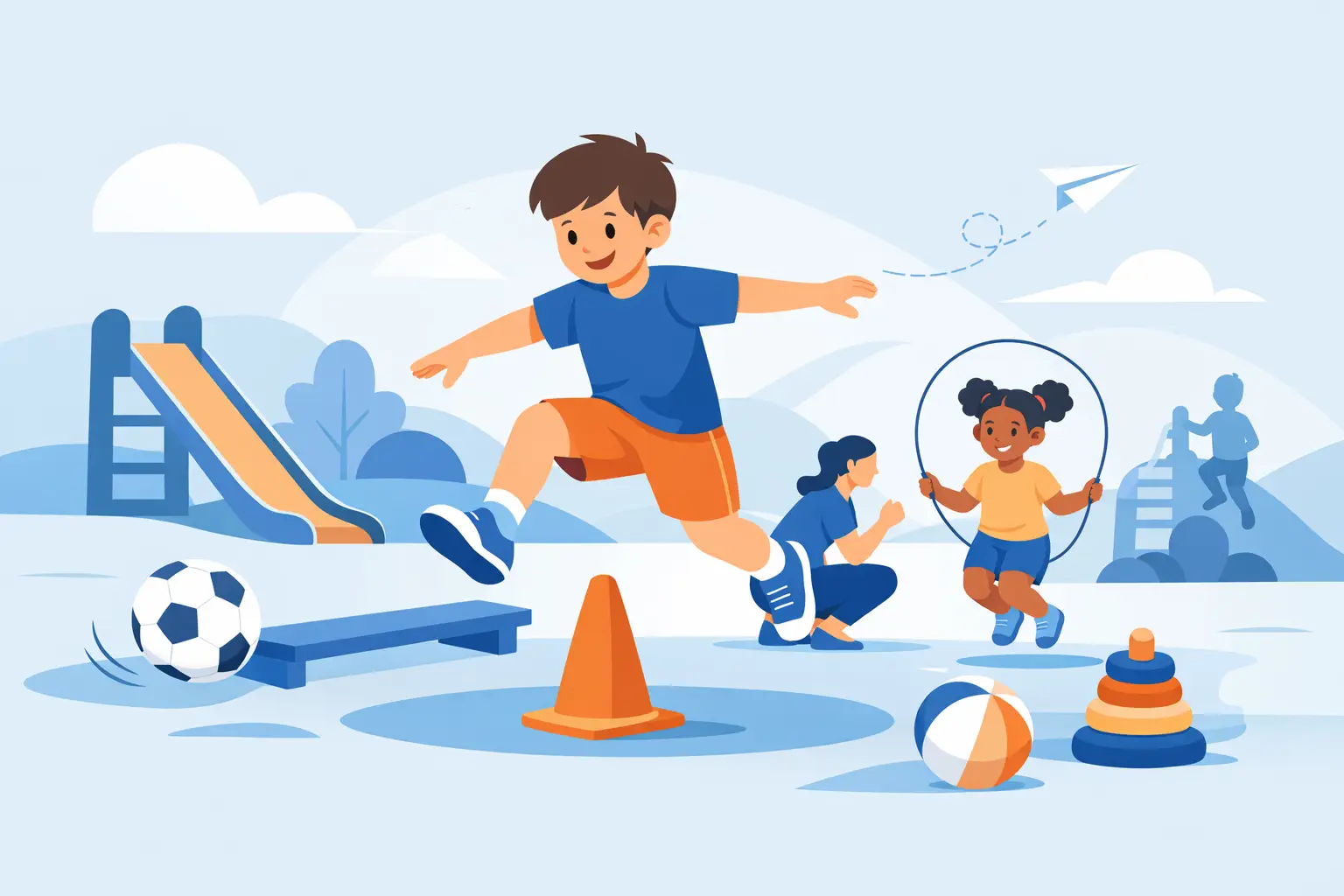
The same is true in many common activities. Stepping over cones works on balance and body control. Carrying soft balls from one basket to another builds coordination and postural strength. Crawling through tunnels supports shoulder stability and whole-body coordination. Jumping between markers builds leg strength and landing control.
This is why purposeful play is so effective in the early years. Children stay engaged because the activity feels fun, but underneath the fun they are practicing essential physical skills again and again.
How parents can support gross motor development at home
You do not need complicated equipment to encourage progress. What children need most is space to move, chances to repeat skills, and an adult who makes the experience feel positive.
A few minutes of intentional play can go a long way. You might set up a simple path where your child walks along a line, steps over a pillow, tosses a soft ball into a basket, and finishes with a jump. You might roll a ball back and forth and encourage your child to squat to pick it up each time. Even a walk to the park becomes a gross motor opportunity when children climb, balance, run, and explore.
The best parent support usually looks like encouragement rather than pressure. Instead of focusing on whether the child does it perfectly, focus on effort, body awareness, and enjoyment. Phrases like "You balanced so carefully" or "You used your whole body for that swing" help children notice what they are doing well.
When structured activities can help
Free play is valuable, but structure has its place too. Some children benefit from guided activities that break movement into simple, age-appropriate steps. This can be especially helpful for parents who want ideas beyond the playground or who are looking for a consistent way to build skills over time.
A strong early childhood movement program should meet children where they are developmentally. It should use playful repetition, clear routines, and simple goals. Most of all, it should make room for parent involvement, because young children often feel safer and more motivated when a trusted adult participates alongside them.
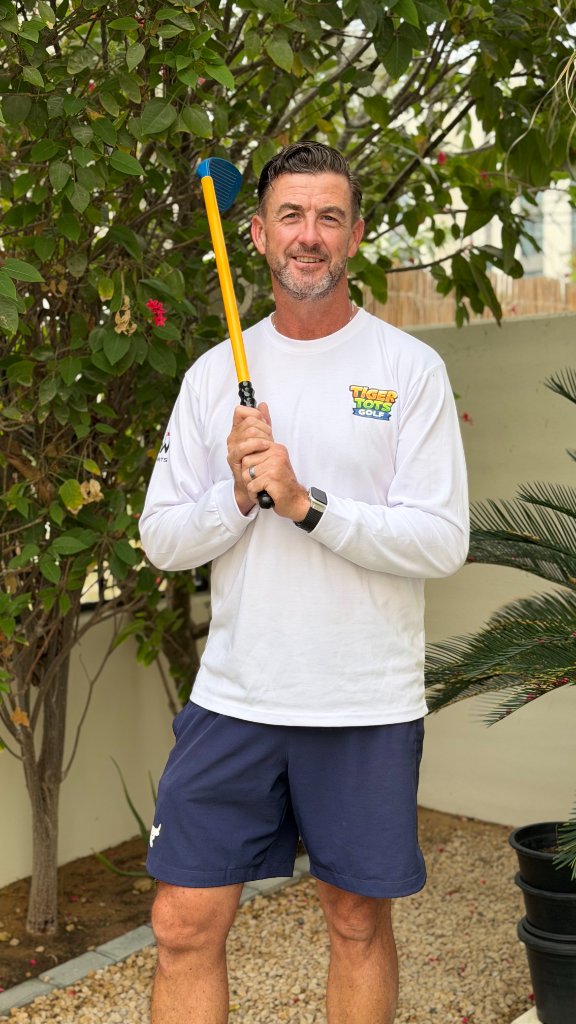
That is part of what makes development-led sports experiences so effective in the preschool years. In a program like TigerTOTS Golf, children are not expected to perform like mini athletes. They are given age-appropriate opportunities to balance, rotate, swing, carry, reach, and move with purpose - all in a way that supports confidence as much as coordination.
Signs a child may need extra support
There is a wide range of normal in early childhood, so one awkward run or missed jump is usually not a concern. Still, parents may want to pay closer attention if a child avoids movement often, falls much more than peers, seems unusually stiff or floppy, struggles with basic climbing or jumping, or becomes frustrated by physical tasks that stay very difficult over time.
Sometimes children simply need more exposure and practice. Other times, a pediatrician or developmental specialist can help determine whether additional support would be useful. The goal is not to compare children. It is to understand what helps each child feel successful and capable.
Gross motor development in early childhood is built one playful movement at a time. A jump, a climb, a run, or a simple swing can tell you a great deal about how a child is growing. When children are given patient guidance, room to explore, and joyful opportunities to use their whole body, they are not just learning to move better - they are learning to trust themselves.