A two-year-old is not looking for a perfect golf swing. They are looking for movement, connection, and something that feels fun enough to try again. That is why toddler golf lessons work best when they are built around child development first, with golf as the tool rather than the pressure.
For parents, that shift matters. The right early golf experience can support balance, hand-eye coordination, listening skills, confidence, and parent-child bonding. The wrong one can feel too technical, too long, or simply mismatched to how young children actually learn.
What toddler golf lessons should really look like
At ages 2 to 5, children learn through purposeful play. They respond to rhythm, repetition, imitation, and short activities that give them quick wins. A strong lesson does not expect preschoolers to stand still for long explanations or repeat adult-style drills. Instead, it introduces golf in a way that matches a young child’s body, attention span, and emotional stage.
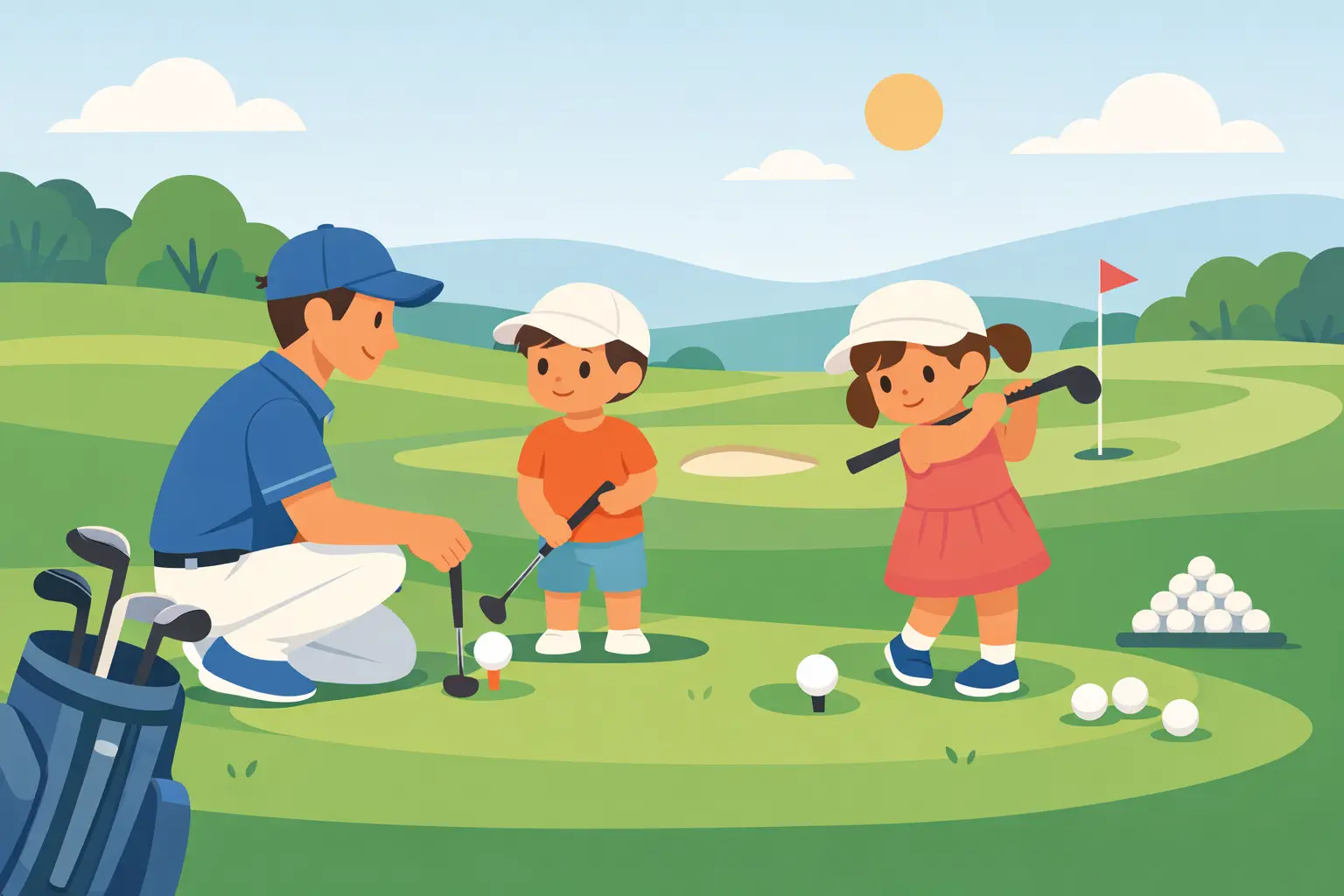
That usually means simple stations, colorful targets, movement-based games, and lots of encouragement. One activity might focus on rolling a ball to a target to build direction and control. Another might involve swinging with a child-safe club to practice coordination. A third might use jumping, balancing, or reaching to support the core motor skills that make future sports learning easier.
This is where many parents feel relieved. Toddler golf lessons are not about creating a mini tournament player. They are about helping a child become comfortable with movement, instruction, and trying something new.
Why golf can be a strong early childhood activity
Golf is often seen as a technical sport for older kids and adults, but for toddlers, it offers something different. It combines movement with focus in a way that can be scaled down beautifully for young children.
A toddler might learn to carry their club safely, wait for a turn, tap a ball toward a target, and celebrate effort instead of outcome. Those moments sound small, but they build meaningful foundations. Children begin to understand how their bodies move in space. They practice following simple directions. They gain confidence from doing something on their own while still feeling supported.
Golf also has a natural pace that can suit many young children when taught appropriately. It does not require constant running, yet it still develops coordination and body control. For some families, especially those looking for a balanced enrichment activity rather than a high-energy team sport, that can be a very good fit.
Still, it depends on the child. Some toddlers need more movement woven into every lesson. Others love the focus of target-based play right away. The best programs account for both.
What parents should look for in toddler golf lessons
The biggest sign of a good program is that it respects the age group. That sounds obvious, but it is not always the standard. If a class feels like an older child’s lesson made smaller, it may not serve a toddler well.
Look for instruction that is short, upbeat, and interactive. Children ages 2 to 5 need frequent transitions and clear, simple language. They also benefit from routines. When lessons follow a predictable structure, children feel safer and more ready to participate.
Parent involvement is another major advantage, especially for younger toddlers. A parent-child format helps children settle in, copy movements, and feel encouraged without pressure. It also gives parents a front-row view of their child’s progress. You are not just dropping them off at an activity. You are part of the learning experience.
That matters because early development is deeply relational. Children often try more when a trusted adult is beside them. In a quality program, the parent’s role is not to coach technique but to support confidence, attention, and joyful participation.
Toddler golf lessons and child development
The strongest reason many families choose golf at this age is not sport specialization. It is whole-child growth.
Coordination and motor skills
Swinging, reaching, aiming, bending, carrying, and walking with control all support physical development. These actions strengthen balance, bilateral coordination, and body awareness. Before a child can learn a more advanced golf skill later on, they need those broader movement patterns in place.
Confidence and emotional growth
Young children thrive on success they can feel. Hitting a ball toward a target, taking a turn independently, or remembering a simple instruction can all become confidence-building moments. A supportive instructor helps children feel capable without making performance the focus.
Listening and early learning habits
Toddler lessons can gently build classroom-style readiness too. Children practice waiting, watching, copying, and transitioning between activities. These are useful life skills, not just sports skills.
Parent-child connection
Shared activities create trust and positive memories. When a parent participates, the child often feels more secure and more willing to engage. Families also leave with ideas they can repeat at home in simple ways.
When is a child ready to start?
Many parents assume golf should wait until elementary school, but toddlers can absolutely be introduced earlier if the format is right. Readiness has less to do with natural athletic ability and more to do with temperament, curiosity, and environment.
A child may be ready if they enjoy movement, can engage in a short structured activity, and show interest in copying adults or aiming objects at targets. They do not need to know anything about golf. They do not need to hold a club perfectly. They just need a setting that welcomes exploration.
That said, not every day will be a great lesson day for a toddler. Fatigue, hunger, big emotions, and changing routines can all affect participation. Good instructors expect that. Progress at this age is rarely linear, and that is normal.
What a great first lesson feels like
A strong first experience should feel welcoming, organized, and low-pressure. There should be a clear routine, child-friendly equipment, and activities that move quickly enough to hold attention.
Parents should leave with a sense that the lesson had purpose, even if their child did not do every activity perfectly. For toddlers, success might look like joining the warm-up, taking one or two turns, or smiling through a new experience. Those are real wins.
This is one reason structured parent-child programs can be so effective. A thoughtful program, such as TigerTOTS Golf, recognizes that early participation is about building readiness, confidence, and core movement patterns through play. That developmental lens helps families see value beyond whether a child can hit a ball far.
What to avoid in toddler golf lessons
If a program uses long technical explanations, long waiting lines, or rigid expectations, it may not be age-appropriate. Toddlers do not learn best by being corrected over and over. They learn by doing, repeating, observing, and feeling successful enough to keep going.
It is also wise to avoid comparing children. One child may jump into every activity. Another may watch quietly for several weeks before participating fully. Both can be learning. Early childhood growth is uneven by nature.
Parents should also be cautious about over-scheduling. A toddler does not need a packed week of enrichment to make progress. One well-designed lesson with opportunities to reinforce skills through play at home is often more beneficial than too many structured activities.
How to support learning at home
The best toddler golf lessons often extend beyond class in very simple ways. You do not need a backyard putting green or a full set of clubs. A soft ball, a safe open space, and a few minutes of focused play can go a long way.
Rolling a ball to a target helps with aiming and turn-taking. Tapping a ball gently across the floor supports control. Even games that are not obviously golf-related, such as balancing, hopping, or carrying objects carefully, can strengthen the same developmental foundations.
The key is to keep it light. At this age, repetition should feel playful, not like homework. Follow your child’s interest. Stop while they are still enjoying it. That is often what brings them back eager for more.
Why the right start matters
Toddler golf lessons can be a wonderful beginning, but only when they honor what early childhood really is. This stage is not about polishing technique early. It is about giving children a positive relationship with movement, learning, and trying.
When golf is introduced through playful structure, active parent involvement, and age-appropriate expectations, it becomes much more than a sport lesson. It becomes a way for children to grow in confidence, coordination, and connection at a pace that feels right for them.
If you are considering a first class, look for the program that sees your child as a whole child, not just a future player. That is usually where the best learning begins.