

A two-year-old lining up a soft golf ball, taking a proud swing, and then deciding the target is actually a nearby bucket is not “off task.” It is childhood learning in motion. For parents considering structured play versus free play, the question is rarely which one is better. The more helpful question is what your child needs from play right now.
Young children need room to imagine, repeat, experiment, and lead. They also benefit from gentle guidance that helps them practice new movements, follow simple routines, and feel successful with others. When play is age-appropriate and pressure-free, both experiences can support confident, capable growth.
What Is Free Play?
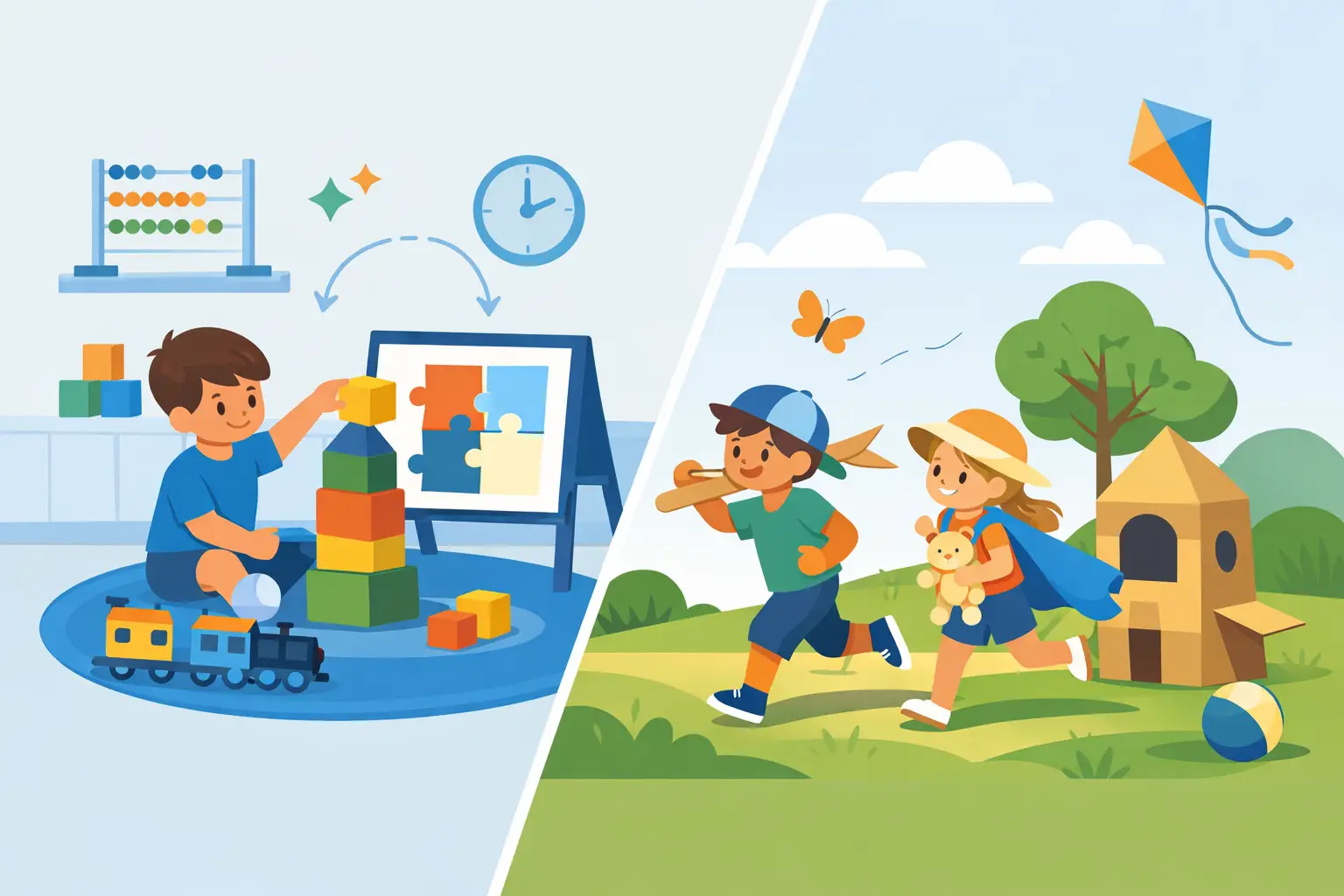
Free play is child-led play. A child chooses what to do, how long to do it, and often changes the plan along the way. They might turn cushions into stepping stones, make up rules for rolling a ball, or spend ten minutes placing toy animals in a very particular order.
There is no adult-defined outcome that the child has to reach. That freedom gives children valuable practice in decision-making, creativity, persistence, and self-expression. It also lets them explore their interests at their own pace.
For children ages 2 to 5, free play can look wonderfully messy. A child may start by “putting” a ball into a cup, then carry the club like a flag, then invite a parent to play a made-up game. Adults do not need to correct every change in direction. Often, observing and joining the child’s idea is enough.
Free play is especially useful when children need to release energy, reset after a busy day, or work through new feelings. It can happen at home, at the playground, in the backyard, or with a few simple toys on the living room floor.
What Is Structured Play?
Structured play is guided by an adult and has a simple purpose, routine, or skill focus. It does not mean strict drills, long instructions, or expecting preschoolers to perform like older athletes. Good structured play is still playful. It simply gives children a clear starting point and a small, achievable challenge.
For example, a parent might set up three targets and invite a child to roll a ball toward each one. The activity could focus on balance, hand-eye coordination, taking turns, or listening for a cue. The adult introduces the game, demonstrates it, and encourages the child through it.
A quality structured activity for young children has room for choice. Perhaps the child gets to select the color of the target, count the balls, or decide whether to roll, toss, or gently tap. That flexibility keeps the activity engaging while preserving its developmental purpose.
In a parent-child setting, structure also creates a reassuring rhythm. Children begin to recognize what comes next: a welcome activity, a movement game, a turn-taking challenge, and a calm finish. Predictable routines can help young children feel secure enough to try something new.
Structured Play Versus Free Play: Why Children Need Both
Structured and free play build different, overlapping skills. Free play invites children to lead. Structured play gives them a supported opportunity to practice. Neither needs to replace the other.
A child who is building a tower independently may learn to solve a problem when it falls. In a guided movement game, that same child may learn how to bend their knees, wait for a turn, and try again after missing a target. Both moments matter. One develops ownership and imagination; the other offers focused repetition and encouragement.
The right balance depends on your child’s age, temperament, daily schedule, and needs. A child who spends a full morning in a highly organized preschool environment may need open-ended outdoor time after school. Another child may enjoy free play but benefit from a short, warm activity that helps them practice coordination or join in with peers.
The goal is not to fill every hour with enrichment. Young children need unhurried time, including time to be bored, daydream, and invent. At the same time, a thoughtful class or parent-led activity can introduce experiences that may not happen through free play alone, such as learning safe equipment use, practicing a new movement pattern, or participating in a group routine.
How Purposeful Play Supports Early Development
Purposeful play begins with a developmental goal, not a performance goal. For a young child, success may be holding a club with two hands, walking along a line, rolling a ball toward a target, or smiling after trying something unfamiliar.
Golf-inspired activities are particularly adaptable for this age group because they can include walking, reaching, bending, balancing, aiming, rolling, tossing, and gentle swinging. These are foundational movements, not technical golf lessons in miniature. The equipment and expectations should always fit the child, not the other way around.
At TigerTOTS Golf, parent-child participation is part of that purpose. A familiar adult can model an activity, offer a hand when balance feels tricky, and celebrate effort without making the moment feel like a test. Children are often more willing to explore when they know a parent is nearby and engaged.
Purposeful play also supports emotional development. When a child waits briefly for a turn, hears “let’s try again,” or watches another child succeed, they are practicing early social and emotional skills. These moments should be handled with patience. A child may not be ready to join every activity immediately, and watching from the side can be a meaningful first step.
Signs an Activity Has the Right Amount of Structure
Parents do not need a formal lesson plan to create meaningful play. A simple activity is likely well matched when your child understands the invitation, can participate with a little support, and remains interested for a few minutes.
Look for a challenge that is small enough to feel possible. If a child becomes frustrated, simplify the task. Move the target closer, use a larger ball, reduce the number of turns, or join them in the activity. If they are quickly bored, add a playful variation, such as pretending the ball is traveling to a “treasure cave” or asking them to choose the next target.
It is also helpful to notice whether the adult is doing too much. In structured play, adults guide the experience, but children still need chances to move, choose, and discover. Long explanations are rarely necessary for ages 2 to 5. A brief demonstration and a cheerful invitation usually work better.
Bringing Both Types of Play Into Your Week
A healthy rhythm can be simple. Give your child daily opportunities for unstructured movement and imagination, then add short guided activities when they are rested and receptive. Five focused minutes can be more valuable than 30 minutes of pushing through resistance.
At home, you might invite your child to create their own ball game first. After they have led for a while, introduce one gentle challenge: “Can we roll the ball to the pillow together?” This approach respects their ideas while giving them a chance to practice a skill.
In a class setting, look for programs that understand early childhood. The environment should feel welcoming, equipment should be child-sized, and adults should celebrate participation rather than perfection. Young children learn best when activities are active, clear, and flexible enough to honor each child’s comfort level.
There will be days when your child eagerly follows the game and days when they want to carry the cone, sit beside you, or do something completely different. That is normal. Growth is not always visible as a straight line, especially in the early years.
The best play experiences leave children feeling capable and connected. Offer the structure that helps them try, protect the freedom that lets them lead, and let joy be the reason they want to come back tomorrow.