
A rolled-up pair of socks, a laundry basket, and five calm minutes can become a meaningful movement lesson for a preschooler. The best preschool golf drills at home do not ask children to copy an adult swing or hit a ball far. They invite children to move, aim, balance, listen, and try again with a parent close by.
For children ages 2 to 5, golf is a wonderful vehicle for foundational development. Holding a club, tracking a soft ball, and taking turns all support coordination and confidence. The goal is not a perfect score. It is helping your child feel capable, curious, and proud of what their body can do.
Set Up for Safe, Happy Play
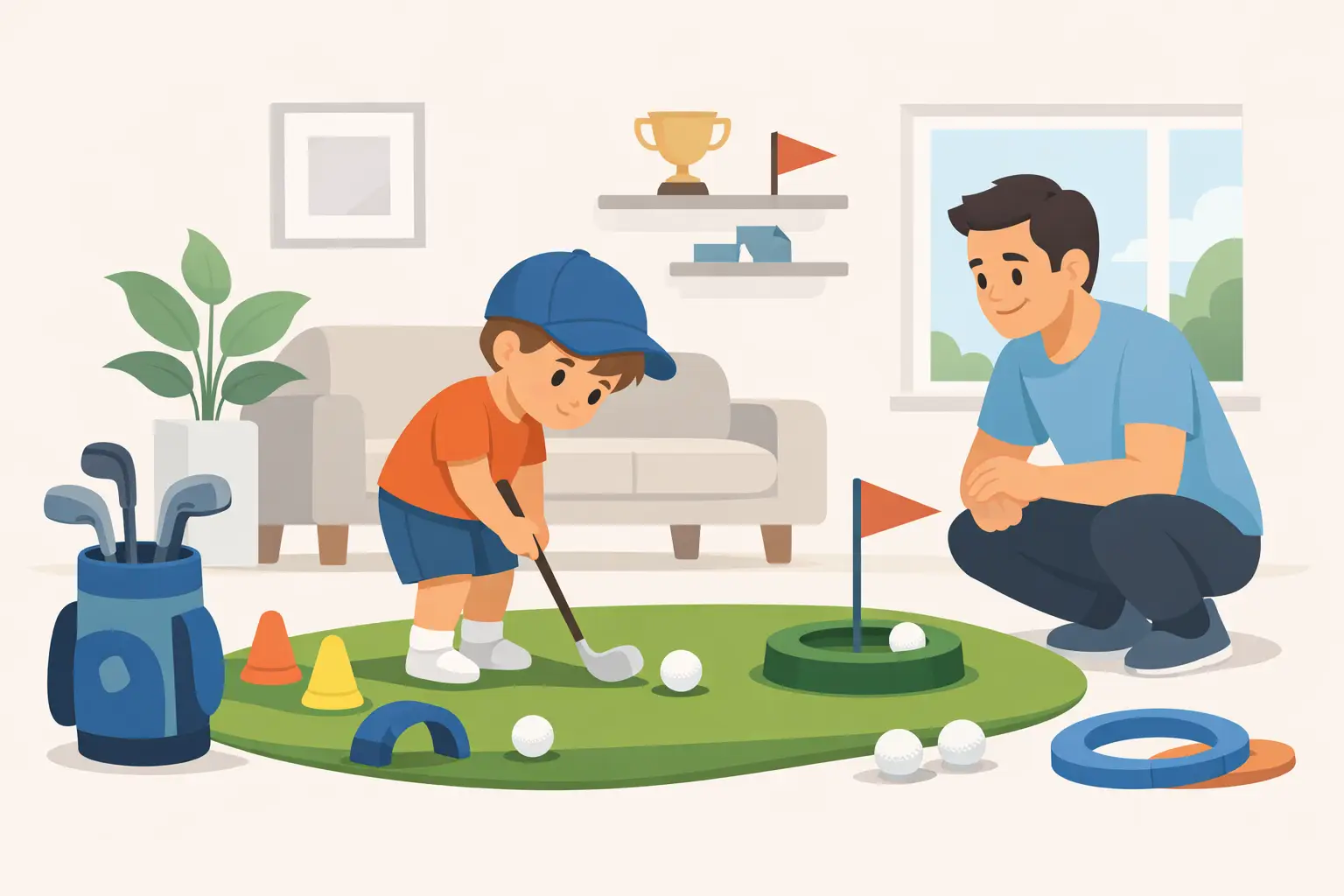
Choose an open indoor area with a clear path, or a small outdoor space with no fragile objects nearby. A child-sized plastic club is ideal, but a lightweight toy stick can work for some activities. Use foam balls, soft practice balls, or rolled socks indoors. Hard golf balls are best saved for a supervised outdoor setting with plenty of space.
Keep each activity short. Two to five minutes is often enough before a preschooler needs a reset, a drink of water, or a new challenge. Your role is to demonstrate simply, offer one cue at a time, and notice effort out loud: “You kept your eyes on the ball,” or “You tried that again even when it was tricky.”
At TigerTOTS Golf, purposeful play means treating these small moments as real learning. A playful drill still has a purpose, whether that is building hand-eye coordination, body awareness, or the confidence to take a turn.
7 Preschool Golf Drills at Home
1. Roll to the Target
Start without a club. Sit or kneel with your child a few feet from a basket, upside-down bucket, or taped square on the floor. Take turns rolling a soft ball toward the target. Begin close enough that success is likely, then move the target back a small step when your child is ready.
Rolling is a valuable first step because it lets children practice aiming and controlling force without managing a club at the same time. Ask simple questions such as, “Was that roll gentle or strong?” This helps your child connect movement with outcome without turning the activity into a test.
2. Animal Walk Ball Hunt
Place three to five soft balls around the room or yard. Invite your child to travel to each ball using a different animal movement: bear walk, bunny hops, slow turtle steps, or flamingo balance. Once they reach a ball, they can pick it up and carry it back to a “home base.”
This may not look like traditional golf, but it develops the movement skills that make golf enjoyable later. Preschoolers need balance, spatial awareness, and the ability to change levels before they need detailed swing instruction. Keep the animal choices light and let your child suggest one too.
3. The Stop-and-Go Putt
Create a short putting lane with painter’s tape, pool noodles, books, or two parallel lines of toys. Place a soft ball at the start and a large target at the end. Show your child how to stand beside the ball, make a tiny back-and-forward motion, and tap the ball through the lane.
Use playful language instead of technical correction. “Quiet feet, little tap” is easier for a young child to understand than a long explanation of posture. If the ball leaves the lane, simply reset and say, “Let’s see what a softer tap does.”
For a 2-year-old, it is completely fine to push the ball with the club while standing close to the target. A 4- or 5-year-old may enjoy trying from farther away. The drill should match the child in front of you, not an age-based expectation.
4. Color-to-Color Putting
Set out colored paper, beanbags, or toys as targets. Ask your child to putt the ball to a chosen color: “Can you send the ball to the blue square?” Then switch roles and let your child choose your target.
Adding color recognition turns a simple putt into an engaging parent-child game. It also encourages listening and turn-taking. If your child is still learning colors, name the color naturally rather than asking them to perform: “I see the ball rolling to the yellow marker.”
5. Balloon Tap Challenge
For this drill, trade the ball for a balloon. Encourage your child to tap the balloon gently upward with their hands first, then, if appropriate, with the flat face of a lightweight plastic club. Count how many taps happen before the balloon touches the floor.
A balloon moves slowly, which gives preschoolers more time to track it with their eyes and adjust their bodies. The goal is controlled movement, not keeping score. Stay nearby, especially with younger children, and remove any popped balloon pieces right away.
6. Balance, Freeze, Swing
Place a ball on the floor and ask your child to stand beside it. Before making a small swing or tap, call out “freeze.” Together, hold still for two seconds with feet planted. Then say “go” for the gentle swing.
This drill supports body control and listening skills. Young children often want to rush straight to the exciting part, so the freeze creates a fun pause while teaching them how to organize their bodies. Celebrate stillness as much as contact with the ball. A child who can pause, reset, and begin again is building a skill that carries into many activities.
7. The Family Golf Trail
Create a tiny course with two or three stations: roll a ball into a basket, putt through a tape lane, then carry a ball while balancing along a line. Walk the trail together and let your child repeat a favorite station.
This is especially helpful when a child loses interest in repeating one drill. The changes in movement keep the experience fresh while giving them practice with multiple skills. Avoid making every station harder. One easy success between challenges keeps preschoolers motivated and willing to continue.
How Parents Can Make Practice Feel Supportive
The language you use matters as much as the activity. Rather than saying, “No, do it like this,” try, “Let me show you one idea,” then give your child space to explore. Preschoolers learn through repetition, imitation, and experimentation. Their version of a swing may look unusual, and that is okay.
Offer one simple focus at a time. You might work on a gentle tap today, taking turns tomorrow, and balancing next time. Too many instructions can make a child feel overwhelmed, especially when they are still learning how their body moves.
It also helps to let your child lead occasionally. If they turn the basket into a “crocodile pond” or decide every putt needs a happy dance, follow that idea for a few minutes. Purposeful play has structure, but it should still feel like play. The connection and joy they feel with you are part of the learning.
When to Add More Challenge
A child is ready for a slightly harder version when they are succeeding often, asking for “one more,” or naturally moving farther from the target. Increase only one element at a time. Move the target back, narrow the putting lane, or add one more station to the family trail.
If frustration appears, make the game easier right away. There is no benefit to asking a preschooler to repeat a task that has become discouraging. A closer target, a bigger basket, or a parent-child team turn can restore confidence quickly. Development is rarely a straight line, and a child’s energy can change from one day to the next.
A short home routine can become a bright part of the day: a moment when your child is heard, encouraged, and free to practice being brave with something new. Put the soft ball back in the basket when you finish, celebrate the effort you saw, and leave your child looking forward to the next little swing.