
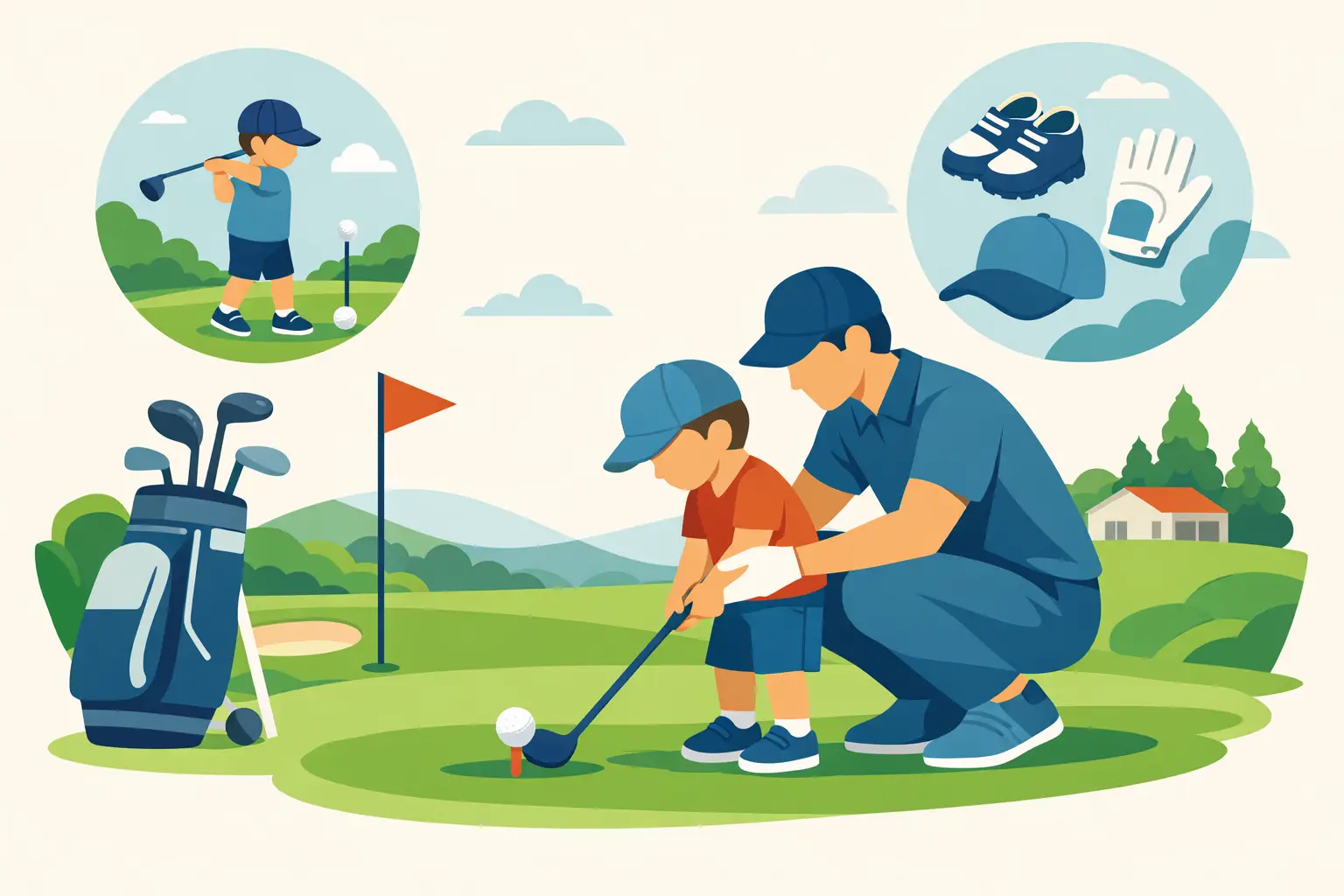
A toddler who turns a wooden spoon into a golf club, happily rolls a ball across the floor, or insists that you watch their latest big swing may be showing curiosity, not necessarily a future golf career. That is exactly where a guide to toddler golf readiness should begin. At ages 2 to 5, readiness is not about grip, distance, or keeping score. It is about whether a child can enjoy purposeful movement, explore a new activity with support, and build confidence through small successes.
For many parents, golf can feel like a sport for older children and adults. Yet its basic movements - rolling, tossing, balancing, aiming, and swinging - can be wonderfully appropriate for young children when they are introduced through play. The key is choosing an experience that meets your child where they are, rather than asking them to perform like a mini athlete.
What Toddler Golf Readiness Really Means
Toddlers do not need to understand golf before trying a golf-based activity. They do not need to know the names of clubs, follow formal rules, or hit a ball in a straight line. Readiness means they are beginning to develop the physical, emotional, and social skills that make a playful class enjoyable.
A ready toddler can usually participate for short stretches, even if their attention wanders often. They may copy a simple action after seeing a parent or instructor demonstrate it. They can begin to take turns, respond to encouragement, and recover when an attempt does not go as planned. These abilities are still emerging, which is why parent-child participation is so valuable.
Golf activities can support development because they invite children to use both sides of the body, judge space, coordinate their eyes and hands, and control their bodies through a swing or roll. But the activity should stay child-centered. If a child is more interested in carrying the ball, placing cones, or celebrating a parent’s shot, that can still be meaningful participation.
Signs Your Child May Enjoy a First Golf Class
There is no pass-or-fail test for starting. Instead, look for a pattern of interest and comfort with simple movement activities. Your child may be ready to try a structured, playful class if they show several of these signs:
- They enjoy rolling, throwing, kicking, or chasing a ball.
- They can hold a lightweight object and experiment with moving it.
- They are curious about copying what parents, siblings, or other children do.
- They can stay near an adult in a group setting, even when they need frequent reminders.
- They respond positively to praise and are willing to try again after a missed attempt.
None of these signs need to be perfect. A 2-year-old may only participate for a few minutes at a time, while a 5-year-old may be ready for longer games and more detailed instructions. Both can benefit from an age-appropriate program.
It also helps to consider your child’s temperament. Some children run toward a new activity immediately. Others need to observe from your lap before stepping onto the activity area. A thoughtful program makes room for both. The goal is not to push a shy child into action, but to offer a safe routine where their comfort can grow week by week.
The Skills That Matter More Than a Big Swing
Parents sometimes worry that their child is not coordinated enough for golf. In early childhood, coordination is not a requirement for participation. It is one of the reasons to participate.
A quality toddler golf experience focuses on foundational skills before technical instruction. Children may practice balance by stepping over markers, body awareness by making big and small shapes with a club, and hand-eye coordination by rolling a ball toward a target. They learn spatial awareness when they notice where their body, club, ball, and friends are in relation to one another.
These activities also support listening and self-regulation. Waiting briefly for a turn, stopping when an adult says “freeze,” and putting equipment back in a designated spot are all valuable early learning moments. They may look simple, but they help children build the habits that support school readiness, group play, and future sports participation.
A child who misses the ball repeatedly is not falling behind. They are learning cause and effect, practicing persistence, and discovering how their body moves. When adults keep the response calm and encouraging, children learn that effort is safe and mistakes are part of play.
Why Parent Participation Changes the Experience
For toddlers, a familiar adult is often the bridge between curiosity and confidence. Parent participation offers reassurance in an unfamiliar environment and gives children a model for how to move, listen, and enjoy the activity.
It also helps parents see developmental progress that can be easy to miss. Perhaps your child begins by holding your hand through every station. A few weeks later, they carry a ball independently, wait for a cue, or proudly show you how they can roll toward a target. Those small shifts are real progress.
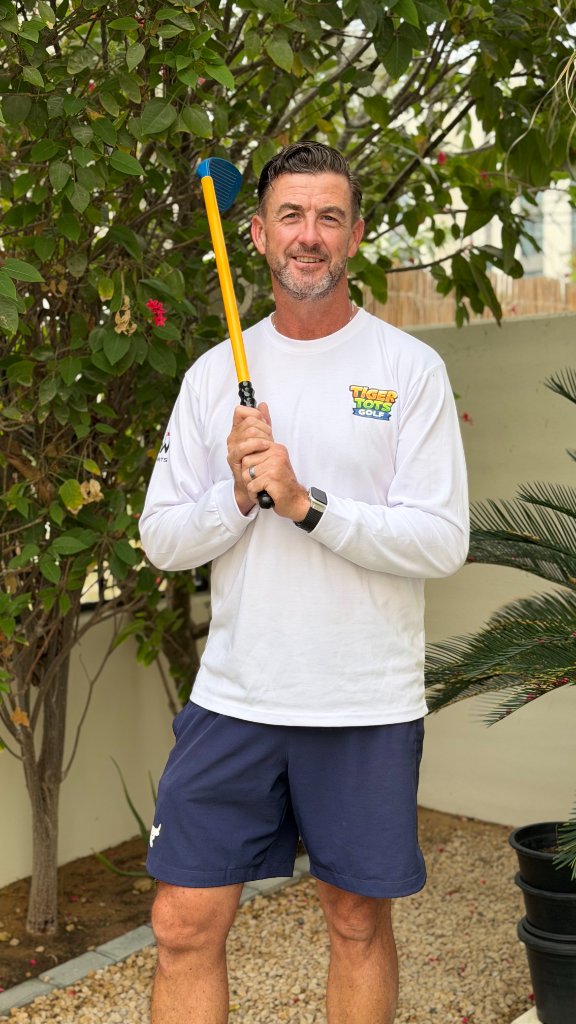
At TigerTOTS Golf, parent-child participation is central because young children learn best through connection, repetition, and shared positive experiences. The parent is not expected to become a golf coach. Your role is to encourage, join the game, and let your child feel proud of trying.
When It May Be Better to Wait
Waiting is not a setback. Some children simply need more time before a group activity feels comfortable, especially if they are adjusting to preschool, a new sibling, or a big routine change.
Consider postponing a class for a short period if your child becomes consistently distressed in group settings, cannot safely follow basic boundaries around equipment, or is currently overwhelmed by transitions. You might also wait if the schedule requires skipping naps, meals, or other routines that keep your child regulated. A tired toddler is rarely able to show their best curiosity.
That said, do not assume that a child must be naturally outgoing or exceptionally active to enjoy golf. A quieter child may thrive in a smaller, well-organized class with predictable routines. A child with abundant energy may benefit from purposeful movement and clear boundaries. Readiness depends on the environment as much as the child.
How to Prepare at Home Without Turning It Into Practice
The best preparation is simple, playful, and short. You do not need a putting green, formal clubs, or a lesson plan. A soft ball, a rolled-up pair of socks, a lightweight plastic club, or even an empty paper towel tube can invite exploration with close adult supervision.
Try placing a laundry basket or a line of pillows a short distance away and invite your child to roll a ball toward it. You can make a gentle target game by asking, “Can the ball visit the blue towel?” The language matters. Invitations feel more welcoming than corrections, especially for young children.
You can also practice the routines that make classes easier. Ask your child to carry one item to a spot, freeze when you say a favorite silly word, or take turns sending a ball down a hallway. Keep each game brief and stop while they are still having fun. A toddler who asks for “one more time” is building a positive relationship with movement.
Avoid giving too many instructions at once. Rather than explaining feet, hands, eyes, and swing mechanics together, offer one simple idea: “Let’s make a gentle swing,” or “Let’s roll it toward the target.” Young children learn through doing, not through long explanations.
Choosing a Toddler Golf Program That Fits
Not every children’s golf class is designed for early childhood development. When comparing options, look beyond the equipment and the promise of golf skills. Ask whether the program is built for your child’s age, attention span, and need for movement.
A strong program uses lightweight, child-sized equipment and activities that change often enough to keep children engaged. It gives families clear routines while leaving room for different developmental levels. Most importantly, it measures success by participation, confidence, and growing coordination, not by how far a child can hit a ball.
Look for instructors who communicate warmly with children and treat parents as active partners. The right class should make your child feel noticed, not rushed. It should offer enough structure to create security, with enough play to keep the experience joyful.
A trial session can be especially helpful. It lets you see whether your child responds to the pace, the instructor, and the group environment. Some children join in right away; others watch first and warm up later. Both responses are useful information, and neither should be judged.
Let Curiosity Lead the First Steps
Your child does not need to arrive ready to play golf in the traditional sense. They only need an opportunity to move, explore, and feel supported by the adults around them. The first successful moment may be a gentle roll, a brave attempt at a swing, or a smile after hearing, “You tried that all by yourself.”
Give your toddler time to grow into the experience. When golf begins as purposeful play shared with someone they trust, it can become a happy place for confidence, coordination, and connection to take root.