
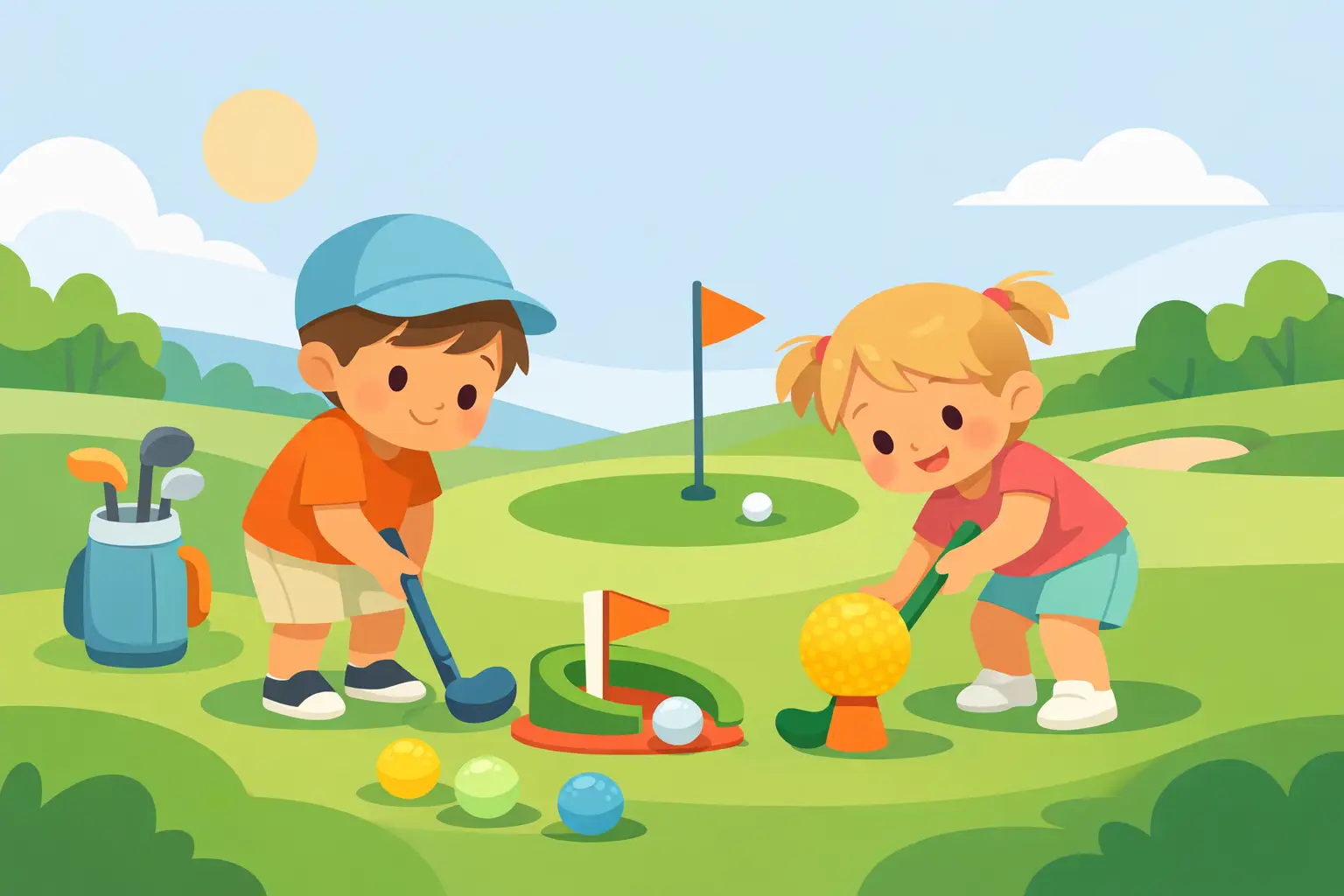
A 2-year-old does not need to learn a perfect golf swing. They need space to move, a caring grown-up nearby, and a playful reason to try again. The best golf activities for 2 year olds turn simple movements - rolling, reaching, carrying, tapping, and aiming - into moments of confidence that happen one small success at a time.
At this age, golf is not about scorecards or technique. It is a wonderful vehicle for purposeful play. With a soft ball, a child-sized club or safe substitute, and a few minutes of focused attention, parents can help their child develop coordination, body awareness, listening skills, and a positive relationship with movement.
Why golf play works so well at age 2
Toddlers learn through doing. They are testing how their bodies work: Can I balance? Can I make this ball move? Can I carry something from here to there? Can I do it again when it does not work the first time?
Golf-inspired play naturally invites these questions. A child bends to pick up a ball, walks toward a target, uses both hands to hold an object, and watches what happens after a gentle tap. Those actions support core motor skills without asking a young child to sit still, follow lengthy instructions, or perform for anyone.
The parent-child element matters just as much. Your child is more likely to try a new movement when they feel safe, seen, and encouraged. A warm “You kept trying” means more than correcting where their hands were placed. At 2, confidence grows from the experience of participation, not from getting every shot right.
Golf activities for 2 year olds to try at home
Keep each activity short - often five to 10 minutes is plenty. Stop while your child is still interested, and feel free to repeat the same favorite game for several days. Repetition is how toddlers build familiarity and skill.
Roll the ball to a target
Place a large, soft ball on the floor and set up a target a few feet away. A laundry basket on its side, a cardboard box, or two pillows with a gap between them all work well. Sit facing your child and invite them to roll the ball toward the target.
This is an ideal first golf-inspired activity because it removes the challenge of holding a club. Your child can focus on the simple cause and effect of sending the ball forward. Celebrate effort, whether the ball reaches the target or rolls in a completely different direction.
Once rolling feels familiar, take turns. You roll the ball first, then let your child have a turn. This gentle back-and-forth introduces waiting, watching, and shared play without making it feel like a lesson.
Tap and chase
Use a lightweight foam ball and a toddler-safe plastic club, foam noodle, or even a rolled-up sock. Show your child how to give the ball one small tap, then invite them to follow it. The goal is not distance. A tiny tap is a success.
Toddlers often want to swing with their whole body, and that is developmentally normal. Give them a clear, simple cue such as “Tap the ball softly” rather than several technical instructions. If they would rather pick up the ball and run with it, let that be part of the game. The movement still counts.
For safety, make sure there is plenty of open space and only one child swinging at a time. A soft ball and a short, lightweight tool are much more appropriate than adult golf equipment.
Color-to-color putting
Put colored paper, towels, or floor markers around a room or in a shaded outdoor area. Ask your child to tap or roll the ball to a color: “Can you send it to the blue towel?” Start with nearby targets and make the distance slightly longer only when they are enjoying the challenge.
This activity adds early listening and color-recognition practice to movement. It also gives children a manageable choice. If “blue” feels too difficult, ask, “Do you want to try the blue target or the yellow target?” Choice helps a 2-year-old feel involved while you keep the activity organized.
Animal walk ball delivery
Place a ball at one end of a safe play space and a basket or bucket at the other. Ask your child to carry the ball like different animals move: waddle like a penguin, stomp like an elephant, or take tiny steps like a mouse. At the destination, they can drop the ball into the basket.
Although there is no club involved, this activity supports the foundations children need for future golf movement: balance, posture, coordination, and control. It is also a helpful option for children who are not yet interested in tapping a ball. Following your child’s interests is part of purposeful play.
Build a simple putting path
Use books, pillows, or pool noodles to create a wide pathway leading toward a target. Your child can roll or gently tap a ball through the path. Keep the lane broad at first. A narrow obstacle course can be frustrating for a toddler who is still learning to judge space and direction.
As your child becomes more confident, add one gentle curve or a “bridge” made from two cushions. This encourages problem-solving: How hard should I tap? Which way is the ball going? The answer does not need to be spoken. Learning can happen through movement, observation, and another try.
Ball hunt and collect
Hide a few brightly colored balls in easy-to-find places around one room or a small yard. Give your child a bucket and invite them to find the balls, collect them, and bring them back to a starting spot.
This is especially useful on days when your child has lots of energy and little interest in standing near a target. Squatting, reaching, carrying, and walking all build strength and coordination. You can finish by rolling the collected balls into a basket together, adding a simple golf-style target at the end.
How parents can make the experience positive
The language you use shapes the experience. Instead of saying, “No, do it this way,” try “Let’s see what happens when we tap gently.” Instead of focusing on whether the ball went into the target, notice the process: “You held on with two hands,” or “You watched where the ball went.”
It also helps to demonstrate without expecting your child to copy perfectly. At 2, children may imitate one part of a movement, then create their own version. That is not a sign they are doing it wrong. It is how they explore and learn.
Be prepared for changing attention. One child may happily roll balls for 10 minutes. Another may prefer 30 seconds of tapping followed by a race to retrieve the ball. Both are valid. The activity should meet your child where they are, rather than asking them to work at an older child’s pace.
A few simple safety and setup guidelines
Choose a clear area away from furniture, windows, pets, and other children. Use large, soft balls that cannot be swallowed, and avoid adult clubs or hard golf balls. A toddler should always have close adult supervision during golf play, especially when any type of club or stick is involved.
Outdoor play can be wonderful, but it depends on the setting. A quiet patch of grass or a shaded park area is far more suitable than a busy driving range. Heat, noise, uneven ground, and distractions can make an activity less enjoyable for a young child. Comfort comes first.
Keep materials minimal, too. One ball, one target, and one parent are enough for a meaningful session. Too many choices can make it harder for toddlers to settle into the game.
Building a routine, not a tiny golfer
A short weekly golf-play routine can become a special family ritual. Perhaps you roll balls after breakfast on Saturday, or spend a few minutes tapping toward a target before bath time. The consistency helps your child know what to expect, while the playful format leaves room for their mood and energy that day.
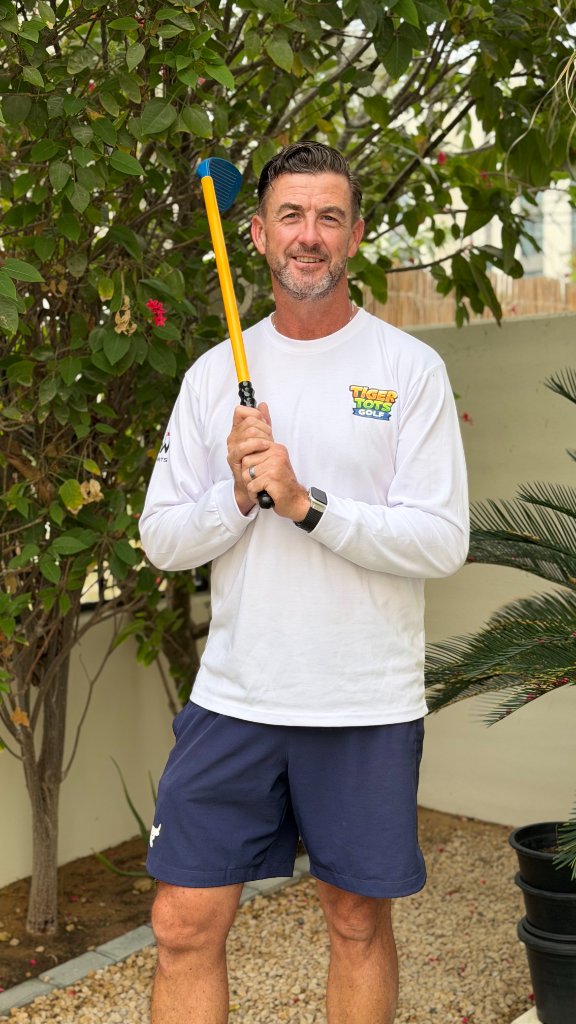
Programs such as TigerTOTS Golf build on this same idea by pairing age-appropriate golf activities with active parent participation and purposeful developmental play. The aim is not early specialization. It is giving children a supportive place to practice movement, confidence, and connection.
Some days, your child will send the ball straight toward the target. Other days, they may carry the club like a flag, sit in the middle of the course, or ask you to take every turn. Stay with the joy of the moment. When play feels safe and shared, your child is learning far more than golf.