
A 3-year-old does not need to hit a perfect golf ball. They need room to swing, laugh when they miss, try again, and feel proud that their body is learning something new. This early years golf development guide is designed for parents who want to use golf as a playful way to support movement, confidence, and connection - without turning childhood into a performance test.
For children ages 2 to 5, golf is not primarily about scorecards, distance, or technique. It is a wonderful setting for learning how to balance, follow simple directions, take turns, and use both sides of the body. When the experience is age-appropriate, a small club, a soft ball, and an encouraging parent can become powerful tools for early development.
Start With Development, Not a Perfect Swing
Young children develop at different rates. One child may happily hold a club and copy a simple movement, while another may be more interested in carrying balls, choosing a target, or running to collect equipment. Both are participating. Both are learning.
At this age, a “good” golf session is one where your child feels safe, capable, and excited to return. The goal is not to correct every grip or stance. It is to offer simple challenges that build fundamental motor skills: balance, coordination, body awareness, hand-eye control, and spatial awareness.
A child who learns to swing through a target, stop their body after moving, or roll a ball toward a marker is building skills that support many future activities. Golf gives those skills a purpose. The child is not simply practicing balance - they are pretending to send a ball to a treasure island or knock down a colorful tower.
What Children Ages 2 to 5 Can Learn Through Golf
The best early golf activities look and feel like play, but they have a clear developmental purpose. Children learn most effectively when the activity is short, active, and achievable.
Ages 2 to 3: Explore Movement and Equipment
Toddlers are still learning what their bodies can do. A club may be used more like a prop than a piece of sporting equipment at first, and that is completely normal. Let children carry a lightweight club, roll a ball with it, tap a ball along the ground, or place balls into a bucket.
Focus on simple words and actions: “stop,” “go,” “tap,” “roll,” and “reach.” These activities support listening skills as well as movement. Rather than asking for a full swing, invite your child to make a gentle tap toward a large target. A wide target gives them a real chance of success, which keeps frustration low and confidence high.
Ages 3 to 4: Build Coordination and Simple Routines
Preschoolers can begin to connect actions in sequence. They may be ready to place a ball down, stand behind it, make a small swing, and watch where it goes. The routine matters more than the result.
This is a helpful age for games that encourage balance and direction. Ask your child to walk along a line before hitting a ball, stand like a statue after a swing, or send a ball through two cones. These small challenges develop control while keeping the activity light and fun.
Ages 4 to 5: Add Choices, Targets, and Turn-Taking
Older preschoolers often enjoy a little more independence. They can choose between two targets, count how many balls reach a zone, or take turns with a parent or sibling. Keep the language positive: “Which target would you like to try?” is more motivating than “You need to hit it farther.”
At this stage, children may start to show interest in how golf works. You can introduce simple ideas such as aiming, gentle versus bigger swings, and looking at the ball. Still, technique should remain flexible. A child’s body is growing quickly, and an overly rigid approach can take the joy out of learning.
How Parents Make the Biggest Difference
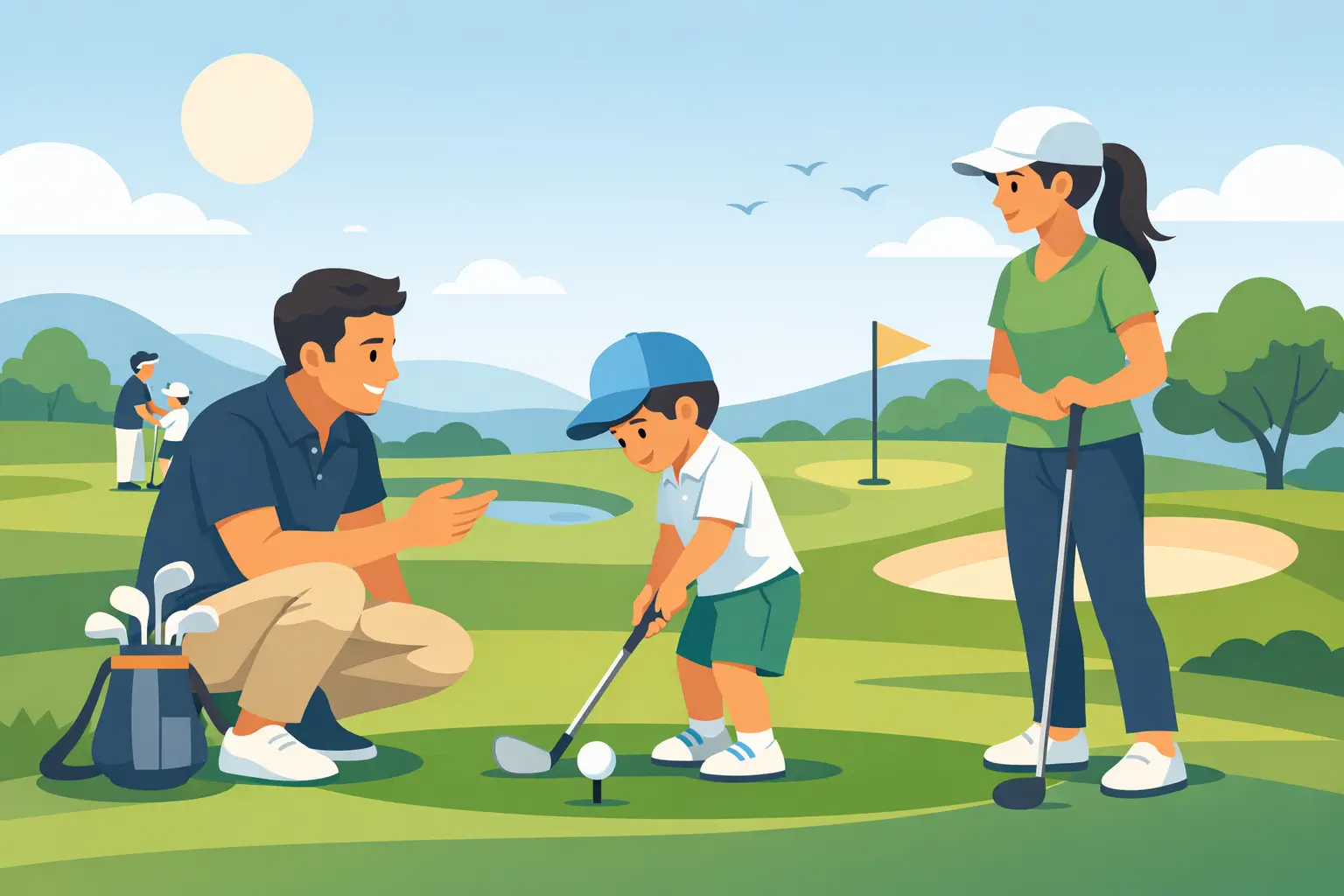
Parent participation is one of the strongest parts of a child’s early sports experience. For young children, a familiar adult provides reassurance, helps them understand instructions, and celebrates the small moments that make them want to keep trying.
Your role is not to become a coach on the spot. It is to be a calm guide. Demonstrate an activity once, use a few clear words, and then let your child experiment. If they hold the club differently than you expected, resist the urge to fix every detail. Ask, “Would you like to try it this way?” or simply model the movement again.
Children also take their cues from your reaction. When a ball goes sideways, smile and say, “That was a big hit. Let’s see where the next one goes.” When they choose to roll a ball instead of swing, stay curious. Flexibility helps children feel ownership over the activity.
A shared golf activity can also create valuable one-on-one time. There is no need for a long lesson or a formal course. Ten focused minutes in the yard, at a park, or during a structured parent-child class can be enough for a meaningful connection.
Create a Simple, Safe Play Space
Early golf does not require a full set of clubs or a large practice area. In fact, less equipment often works better. Choose a lightweight, child-sized club and soft foam or plastic balls. Use a clear open space with enough room for a child to move without being close to windows, cars, pets, or other people.
Before each activity, establish one consistent safety rule: the club stays low until there is space to swing. You can make this easier by creating a “swing spot” with a cone, floor marker, or small mat. Children learn routines through repetition, so use the same cue each time: “Check your space, then swing.”
Keep sessions brief. For many children under 5, 15 to 30 minutes is plenty, especially if the activity includes movement breaks. End while your child is still engaged instead of pushing through fatigue or frustration. That helps golf remain something they look forward to.
Playful Activities That Build Real Skills
A good early years golf development guide should give families ideas they can repeat without making every session feel the same. Rotate a few simple games and adjust the challenge as your child grows.
Color targets: Place colored cones, paper plates, or buckets around the area. Ask your child to tap or roll a ball toward a color. This builds visual attention, aiming, and listening skills.
Animal swings: Invite children to make a tiny “mouse swing,” a medium “bunny swing,” or a big “bear swing.” They learn to control force while using imagination.
Treasure trail: Create a short path with markers. At each point, your child completes a movement such as balancing on one foot, stepping over a line, or rolling a ball into a target. This supports whole-body coordination, not just golf-specific movement.
Clean-up challenge: At the end, ask your child to collect balls by color, carry a club carefully, or place equipment in a basket. These simple responsibilities reinforce organization, listening, and respect for shared spaces.
The activity should match the day. If your child arrives full of energy, start with a movement game. If they seem hesitant, begin with an easy target they can reach right away. Progress is not always a straighter shot. Sometimes progress is joining in after watching, waiting for a turn, or trying one more time.
Know When to Encourage and When to Step Back
Encouragement works best when it recognizes effort and specific actions. Instead of saying “Good job” after every attempt, try “You kept your eyes on the ball,” “You waited until your space was clear,” or “You tried a new swing.” These comments help children understand what they did well.
At the same time, there are moments when less instruction is better. If a child is becoming upset, simplify the game or take a break. If they are repeatedly missing a small target, make it larger or move it closer. A challenge should feel possible, not like a test.
Children benefit from structure, but structure must leave room for personality. Some will love repeating the same activity. Others will want to invent a new rule every few minutes. You can set gentle boundaries while allowing both kinds of learners to succeed.
Build a Foundation That Lasts
Early golf experiences shape more than sporting ability. They teach children that learning can be active, social, and enjoyable. With purposeful play and a supportive parent nearby, children begin to trust their bodies, communicate their needs, and approach new challenges with curiosity.
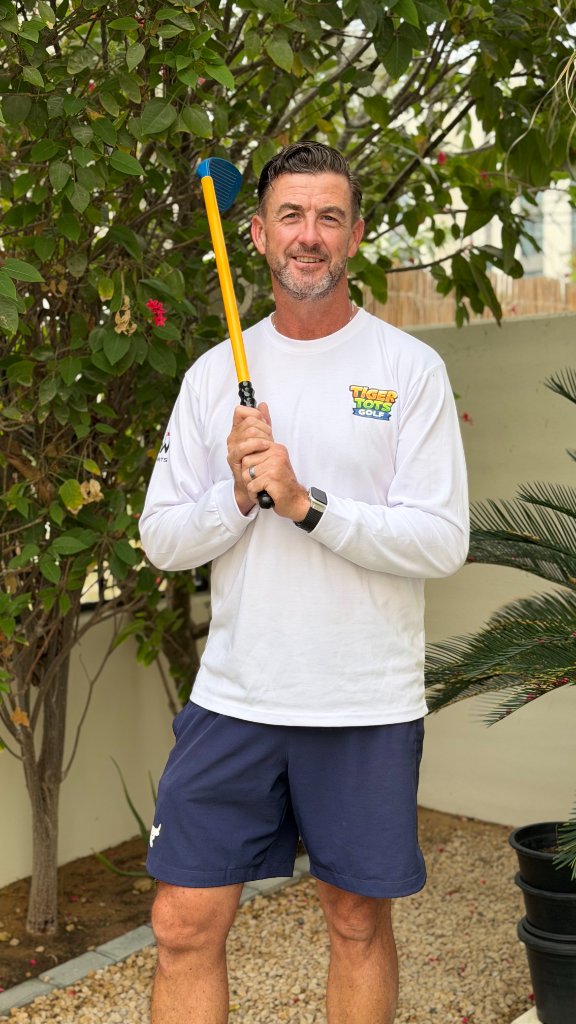
Programs such as TigerTOTS Golf bring this approach into a structured parent-child setting, where activities are designed around developmental stages rather than adult expectations. The value is not in rushing children toward competition. It is in giving them a positive foundation they can carry into golf, school, playground games, and everyday life.
The next time your child taps a ball only a few feet, pause before thinking about what comes next. Notice the concentration, the movement, and the smile after the attempt. Those small moments are where confidence starts to grow.