
A toddler grips a golf club with both hands, misses the ball completely, then beams anyway because they felt the swing. That small moment tells parents a lot. Early childhood fine motor skill development is rarely about perfect technique. It is about helping little hands, fingers, and wrists learn how to work with the eyes, the brain, and the rest of the body in ways that feel manageable, repeatable, and fun.
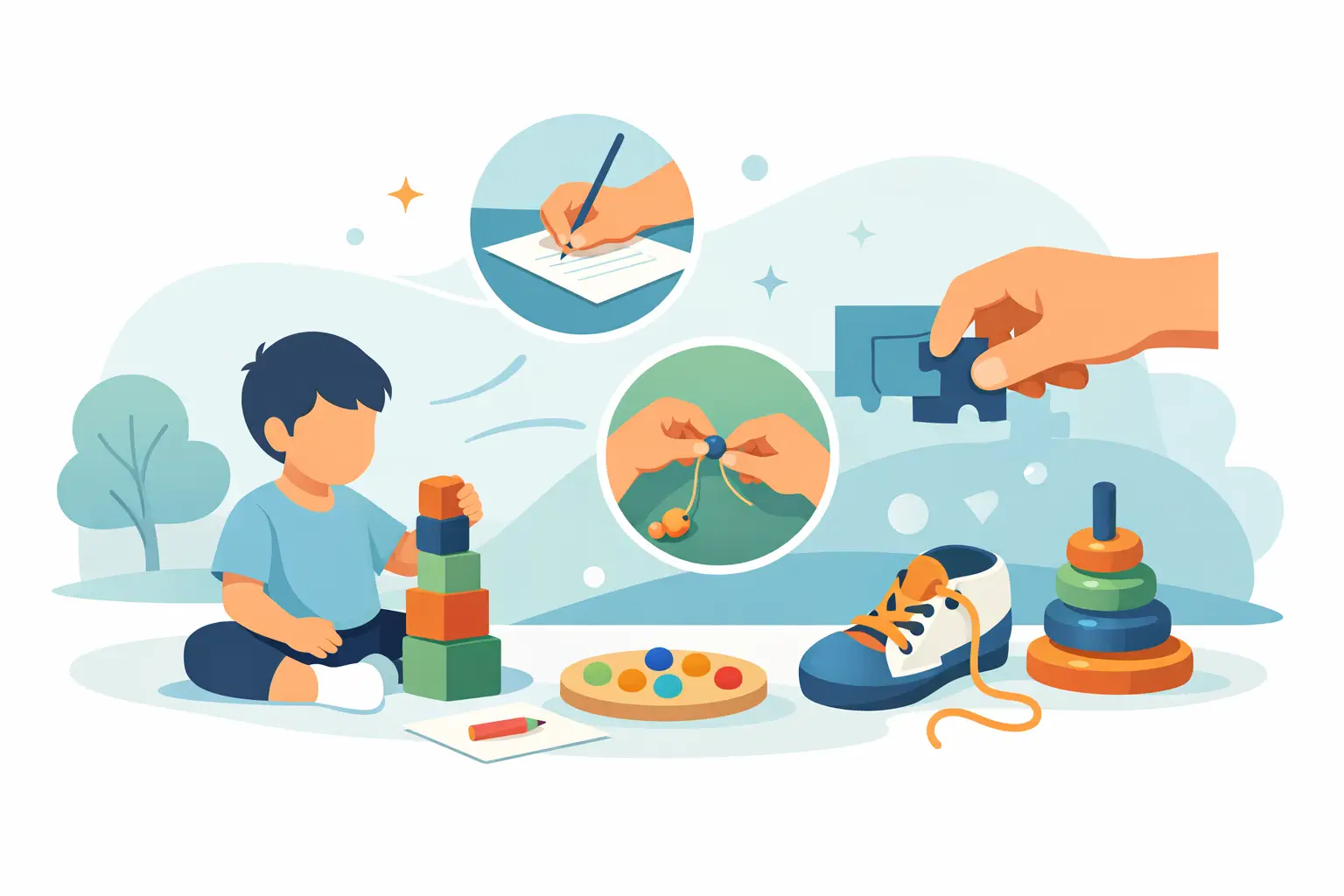
For children ages 2 to 5, fine motor growth happens in the middle of everyday play. It shows up when they stack blocks, turn pages, peel stickers, hold a crayon, or try to tap a ball off a tee. These actions may look simple to adults, but they ask young children to coordinate small muscles with timing, attention, and patience. That is why fine motor skills matter far beyond arts and crafts. They support confidence, independence, and readiness for more complex learning.
What early childhood fine motor skill development really means
Fine motor skills involve the small muscles of the hands and fingers working together with the wrists, arms, eyes, and brain. In early childhood, this development is not isolated from gross motor movement. A child who is learning to balance, rotate, reach, and stabilize through the shoulders and core is also building the physical foundation for better hand control.
That connection matters. Parents sometimes assume fine motor work should happen only at a table with pencils, beads, or scissors. Those activities can help, but they are only part of the picture. Before a child can control a marker with ease, they need postural stability. Before they can grip and guide a toy with purpose, they need shoulder strength and body awareness. Small-muscle control grows best when the whole body is included.
This is one reason purposeful movement activities are so effective in the preschool years. A child who carries equipment, places balls on a tee, lines up a target, and swings through a playful task is not just being active. They are learning how to organize movement, apply force, adjust their grip, and repeat an action with more control each time.
Why these skills matter more than parents sometimes realize
Fine motor development affects daily life in quiet but meaningful ways. It helps children feed themselves, dress with less frustration, brush teeth, open containers, and begin early writing tasks with less fatigue. It also shapes how they feel about trying new things.
When hand tasks feel too hard, young children often avoid them. They may seem distracted, but the real issue is that the task asks more of their body than they can comfortably give. On the other hand, when an activity is matched to their stage of development, children tend to stay engaged longer. They feel capable, and that feeling of capability matters.
There is also an emotional side to this. Fine motor practice teaches persistence. A child places a ball on a tee, knocks it off by accident, tries again, and eventually succeeds. That sequence builds more than coordination. It builds patience, problem-solving, and trust in the learning process.
Signs of healthy fine motor progress in the preschool years
Development does not move on a perfect timetable, and children often show uneven strengths. One child may love manipulating small objects but resist drawing. Another may have strong hand strength but struggle with precision. That range can be normal.
In general, parents may notice progress when a child begins using both hands together more smoothly, controlling simple tools with less effort, and showing greater accuracy in play. This can look like turning pages one at a time, placing objects into small spaces, using a spoon with fewer spills, or experimenting with different grips during activities.
The key is not perfection. It is gradual improvement with repeated opportunities. If a child avoids hand-based tasks consistently, tires very quickly, becomes unusually frustrated, or seems much less coordinated than expected across many settings, it can help to speak with a pediatrician or developmental specialist. Support is most effective when it starts early and stays encouraging.
How play supports early childhood fine motor skill development
Young children learn best when a skill has a purpose they can feel. That is why play works so well. In play, repetition does not feel repetitive. It feels like another turn.
Simple activities can strengthen fine motor control when they invite grasping, pinching, releasing, turning, or tapping. But the best results usually come when the activity also includes movement, attention, and interaction. A child who reaches down to pick up a ball, walks it to a target, places it carefully, and then tries to swing is practicing a full sequence of control. They are stabilizing the body, managing space, and refining hand use within a meaningful task.
This is especially helpful for young children who are not ready to sit still for long periods. Many preschoolers develop hand skills more naturally through active stations than through purely seated work. Purposeful sports play can be a very useful bridge because it gives the hands something to do while the body stays engaged.
Golf-inspired activities are a strong example. Picking up tees, balancing balls, positioning a putter, and aiming toward a target all invite precision in a child-friendly way. The goal is not to teach flawless mechanics at age three. The goal is to create playful repetitions that strengthen coordination and control.
What parents can do at home without turning it into homework
The most effective home support is usually simple, short, and consistent. Children do not need long drills. They need inviting opportunities built into the week.
Start with activities that are just challenging enough. If a task is too easy, it will not hold attention. If it is too hard, it may lead to frustration. A few minutes of stacking, squeezing, placing, drawing, scooping, or tapping can do more than a long session that a child resists.
It also helps to let children participate in real tasks. Carrying small items, helping set up play equipment, opening and closing containers, peeling stickers, or placing balls on a tee all count. These moments build skill because they have a purpose. Children are often more motivated when they feel useful.
Parents should also watch their own pace. Adults naturally want to step in quickly, especially when a child is struggling. But a small pause can be powerful. If your child is trying to line something up, grip a club, or place an object with care, giving them a few extra seconds supports problem-solving and motor planning.
That said, support still matters. Some children benefit from a light prompt such as, "Try using your other hand to help," or "Can you hold it a little lower?" Gentle guidance keeps the experience positive without taking over.
The role of parent-child activities in skill growth
There is a big difference between watching a child practice and participating with them. Parent-child activities create shared rhythm, encouragement, and modeling. Children feel safer trying something new when a familiar adult is involved, especially in the early years.
That does not mean parents need special expertise. In fact, many families are relieved to learn that child development does not require technical sports knowledge. What matters most is presence, patience, and a well-structured activity that fits the child’s stage.
In a strong parent-child setting, the adult helps create success without pressure. They model how to hold, place, or tap. They celebrate effort. They keep expectations realistic. Over time, the child begins to take more ownership, and confidence grows alongside skill.
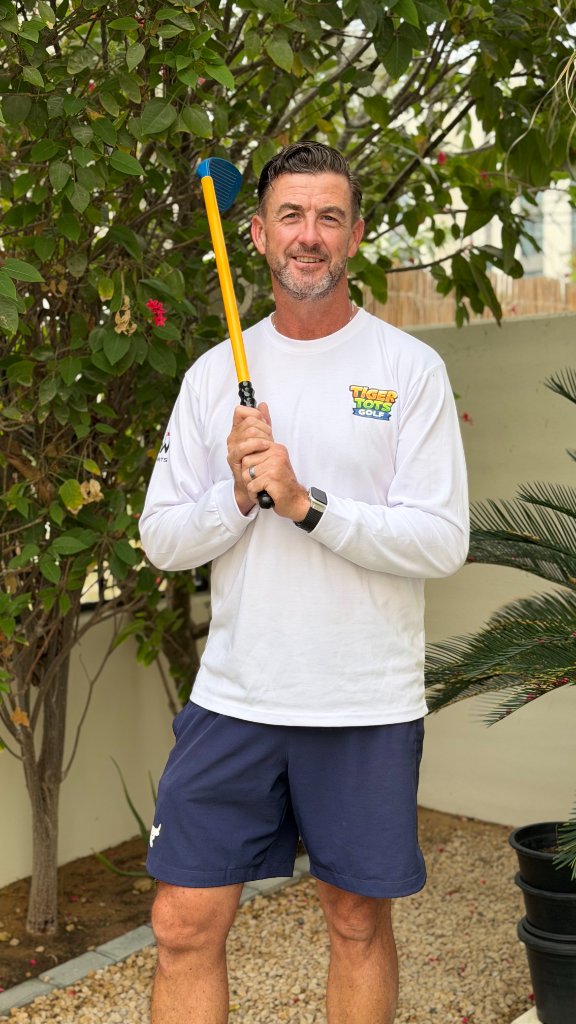
This is part of what makes programs built around purposeful play so effective. When activities are development-led and age-appropriate, children can strengthen fine motor control in a way that feels exciting rather than corrective. At TigerTOTS Golf, that philosophy is central because young children do best when movement, confidence, and connection grow together.
What to avoid when supporting fine motor skills
More is not always better. If an activity leads to regular tears, refusal, or visible tension, it may need to be simplified. Fine motor development should feel challenging at times, but not discouraging.
It also helps to avoid comparing children too closely. One preschooler may hold a tool neatly early on, while another develops that control later but shows stronger whole-body coordination first. Development has patterns, but it also has individual timing.
Finally, try not to separate skill-building from joy. Children this age do not need high pressure around performance. They need repetition wrapped in encouragement. When they feel safe to try, miss, adjust, and try again, learning tends to stick.
If you are looking for a useful lens as a parent, think less about whether your child is doing something perfectly and more about whether they are becoming more willing, more coordinated, and more confident over time. That is real progress, and it often starts with one small hand reaching out to try again.