
A toddler’s best swing may look more like a joyful wiggle than a classic golf pose, and that is exactly where learning should begin. When you create a toddler golf routine at home, the goal is not perfect technique or long shots. It is giving your child regular, happy chances to move, try, laugh, and feel proud with you nearby.
For children ages 2 to 5, golf-inspired play can support balance, hand-eye coordination, body awareness, listening skills, and confidence. The routine does not need a backyard, expensive equipment, or an hour of uninterrupted attention. A small indoor space, a soft ball, and 10 minutes of parent-child play can be plenty.
Start With a Routine That Feels Easy
The most successful at-home routines are simple enough to repeat. Toddlers respond well to familiar patterns because they know what is coming next. That sense of predictability helps them feel secure, especially when they are learning a new movement.
Choose a time when your child is usually rested and receptive. For one family, that might be after preschool and a snack. For another, it may be a calm weekend morning. Avoid building golf play into a rushed moment before dinner or bedtime, when patience is naturally in short supply.
Aim for two or three short sessions each week. Ten to 15 minutes is a very good starting point. A child who wants to stop after six minutes has not failed the routine. They have communicated that six minutes was enough for that day. End while the experience is still positive, and they are more likely to return excited next time.
Create a small play zone
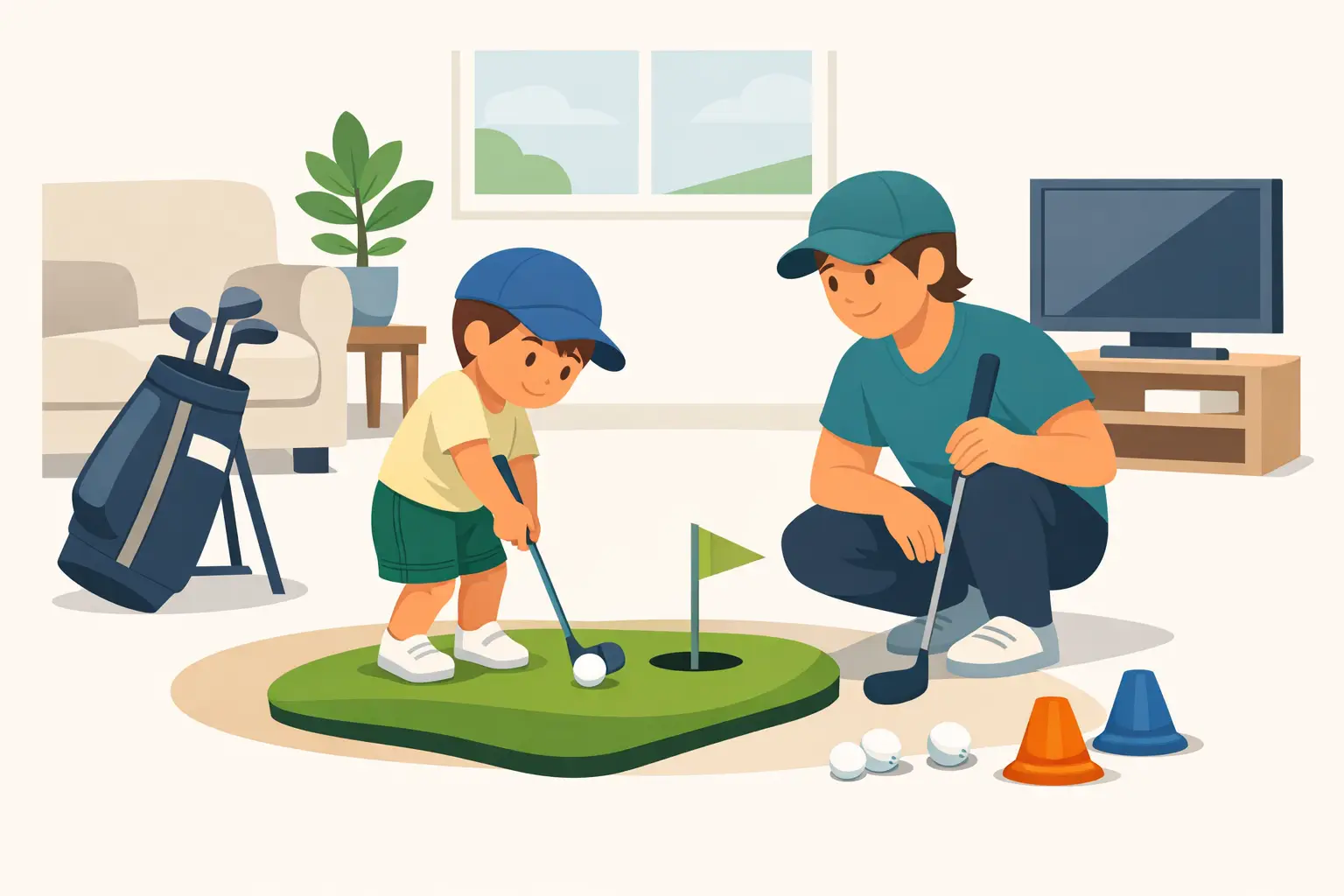
Your golf space should make it easy for your child to focus and safe for them to move. A carpeted room, hallway, patio, or patch of grass can all work. Use soft foam balls, large plastic balls, or rolled-up socks indoors. A child-sized plastic club is helpful, but a lightweight toy stick or a short pool noodle can also work when supervised.
Keep the setup uncluttered. A laundry basket, plastic cup turned on its side, or painter’s tape line can become a target. The more complicated the course looks, the more likely a toddler will want to explore every object rather than practice one simple skill.
Safety comes first. Give your child enough room to swing without reaching furniture, windows, pets, or siblings. A helpful family rule is: "We check our space before our club moves." Say it together before each activity, not as a warning, but as part of the routine.
How to Create a Toddler Golf Routine at Home
A good session has a beginning, a few purposeful activities, and a cheerful finish. The structure helps, but it should never feel rigid. If your child becomes fascinated by rolling balls into a basket for 10 minutes, follow that interest. Purposeful play works best when the child’s curiosity has room to lead.
Begin with a movement warm-up
Before picking up a club, spend two or three minutes helping your child notice how their body moves. Ask them to march like they are walking to the first tee, reach tall like a flag, or balance on one foot while holding a pretend golf ball.
You might say, "Can you make your body still like a statue? Now can you turn your shoulders slowly?" These games build body control without asking a young child to understand formal golf positions. Keep your instructions short and demonstrate as you speak. Toddlers learn far more from seeing and doing than from a long explanation.
Practice rolling before swinging
Rolling is one of the best early golf activities because it introduces direction, distance, and target awareness in a way that feels natural. Place a basket or large cup a few feet away and invite your child to roll a ball toward it.
Celebrate the effort rather than only the result. Try phrases such as, "You looked at your target first," or, "You used such gentle hands." This kind of feedback tells children exactly what they did well and helps build confidence even when the ball misses.
As their coordination grows, change the challenge slightly. Make the target wider or narrower, move it closer or farther away, or ask your child to roll the ball along a taped line. Small changes keep play fresh without overwhelming them.
Add gentle putting play
Once rolling feels familiar, introduce a simple putting motion. Show your child how to stand beside the ball, place the club behind it, and give it a small push toward the target. For a 2-year-old, holding the club with two hands and making contact may be the whole activity. That is a meaningful success.
For older preschoolers, you can use playful cues such as "tiny swing, quiet feet" or "point your belly at the target." Avoid correcting every detail. At this age, a child needs freedom to experiment with grip, stance, and rhythm. Too many instructions can turn a happy activity into a test.
It also helps to take turns. Let your child watch you make a gentle putt, then invite them to try. When you miss, smile and say, "That one went a different way. I get another try." You are teaching resilience as much as golf.
Include a carry-and-place challenge
Not every golf activity needs a club. Carrying a ball to a marker, bending to place it on a spot, and walking around a simple obstacle all develop the core motor skills that support future swings.
Set out two or three cushions, cones, or stuffed animals and make a small "golf journey." Your child can carry their ball around the objects, place it on a taped circle, then roll or putt it toward a target. This adds balance, coordination, and problem-solving while keeping the activity playful.
If your child is highly active, this part may become their favorite. If they prefer quieter play, keep the route very short and spend more time on rolling or putting. The right routine is the one that suits your child’s temperament, not the one that looks most impressive.
Use Language That Builds Confidence
Young children are still learning how to handle mistakes. The words they hear during play can shape whether they see a missed shot as frustrating or as part of learning.
Try to describe what you observe instead of judging the shot. "You kept trying," "You found the ball," and "You used a strong push" are more helpful than saying, "Good job," every time. Specific encouragement helps a child connect effort with progress.
When something does not go as planned, keep the moment light. You might say, "That ball wanted to visit the couch," then guide your child back to the target. Humor lowers pressure and protects the joy that keeps toddlers engaged.
It is also valuable to let your child make small choices. Ask whether they would like the red ball or the yellow ball, whether the target should be near or far, or whether it is your turn or their turn first. Choice gives children a sense of ownership without placing too much responsibility on them.
Know When to Pause or Change the Plan
A routine should support your child, not demand more than they are ready to give. Some days, they may be eager to repeat a putting game. On other days, they may want to carry the clubs around, line up the balls, or simply watch you play. These are all forms of exploration.
If frustration appears, make the task easier right away. Bring the target closer, use a larger ball, or return to rolling instead of swinging. A quick adjustment can turn a difficult moment back into a success. If your child is tired, upset, or losing interest, end with a favorite activity and try again another day.
This is especially true for younger toddlers, whose attention can shift quickly. Preschoolers may enjoy a slightly longer sequence and simple challenges, but they still benefit from plenty of movement, repetition, and praise. Progress is not measured by how many balls reach the target. It is measured by growing comfort, willingness to try, and shared enjoyment.
Make Parent Participation the Most Valuable Part
At-home golf play is not about handing your child a club and stepping back. Your presence makes the activity more meaningful. When you kneel beside them, model a movement, cheer their effort, and take turns, you show them that learning is safe and enjoyable.
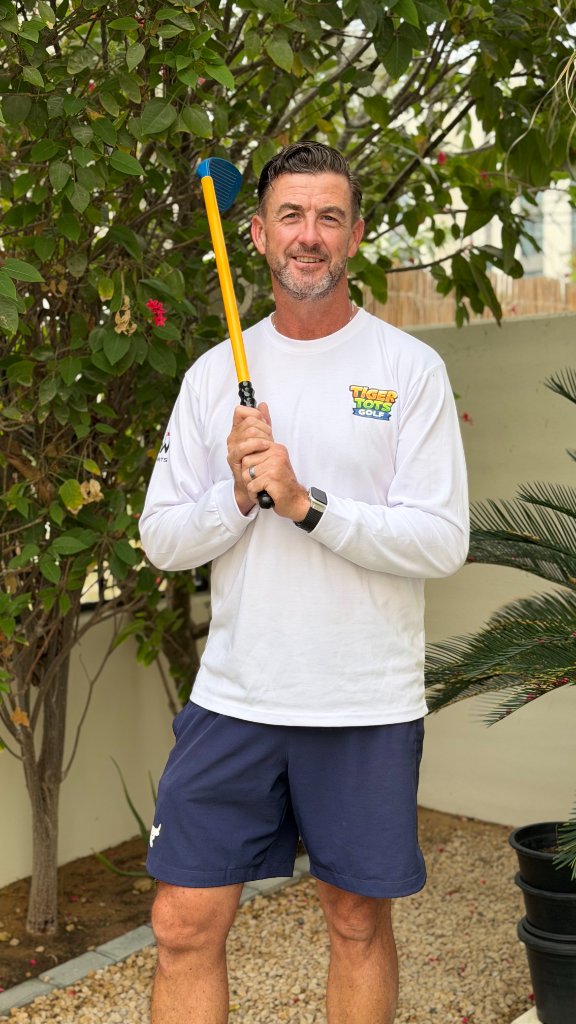
Programs such as TigerTOTS Golf build on this same parent-child approach, using purposeful play to help young children develop confidence and foundational movement skills. Your home routine can extend that feeling between structured sessions: a few calm minutes where your child gets your attention, encouragement, and room to grow.
Keep the equipment simple, the expectations gentle, and the mood warm. A ball that rolls across the room, a missed putt, and a proud high-five can become the small moments your child remembers long after the game is over.