
A toddler lines up a ball, takes a careful swing, misses, laughs, and tries again. That small moment says a lot about child motor skills development. It is rarely a straight line, and it is almost never about getting everything right the first time. For young children, movement skills grow through repetition, curiosity, and the confidence to keep practicing.
Parents often hear terms like fine motor skills, gross motor skills, coordination, and balance, but the real question is simpler. What helps a young child move with more control, more confidence, and more joy? The answer is purposeful play. When children are given age-appropriate activities, clear encouragement, and room to explore, their bodies and brains begin working together in powerful ways.
What child motor skills development really includes
Child motor skills development refers to the way children learn to control and coordinate their movements over time. Some of those movements are large and full-body, like running, jumping, turning, and balancing. Others are smaller and more precise, like gripping, tapping, stacking, or guiding an object with intention.
For children ages 2 to 5, both types matter. Gross motor skills help a child move confidently through space. Fine motor skills support control in the hands and fingers. But in real life, these skills often develop together. A child who bends to place a ball, steadies their feet, focuses their eyes, and then swings is using much more than one isolated ability.
That is why good early movement programs do not rush into technique. They start with the foundations. Posture, balance, rhythm, hand-eye coordination, body awareness, and confidence all come first. When those pieces are in place, sport skills become far easier and far more enjoyable.
Why purposeful play works so well
Young children do not learn movement best through long explanations. They learn by doing. They learn when an activity feels playful enough to hold their attention and structured enough to guide progress.
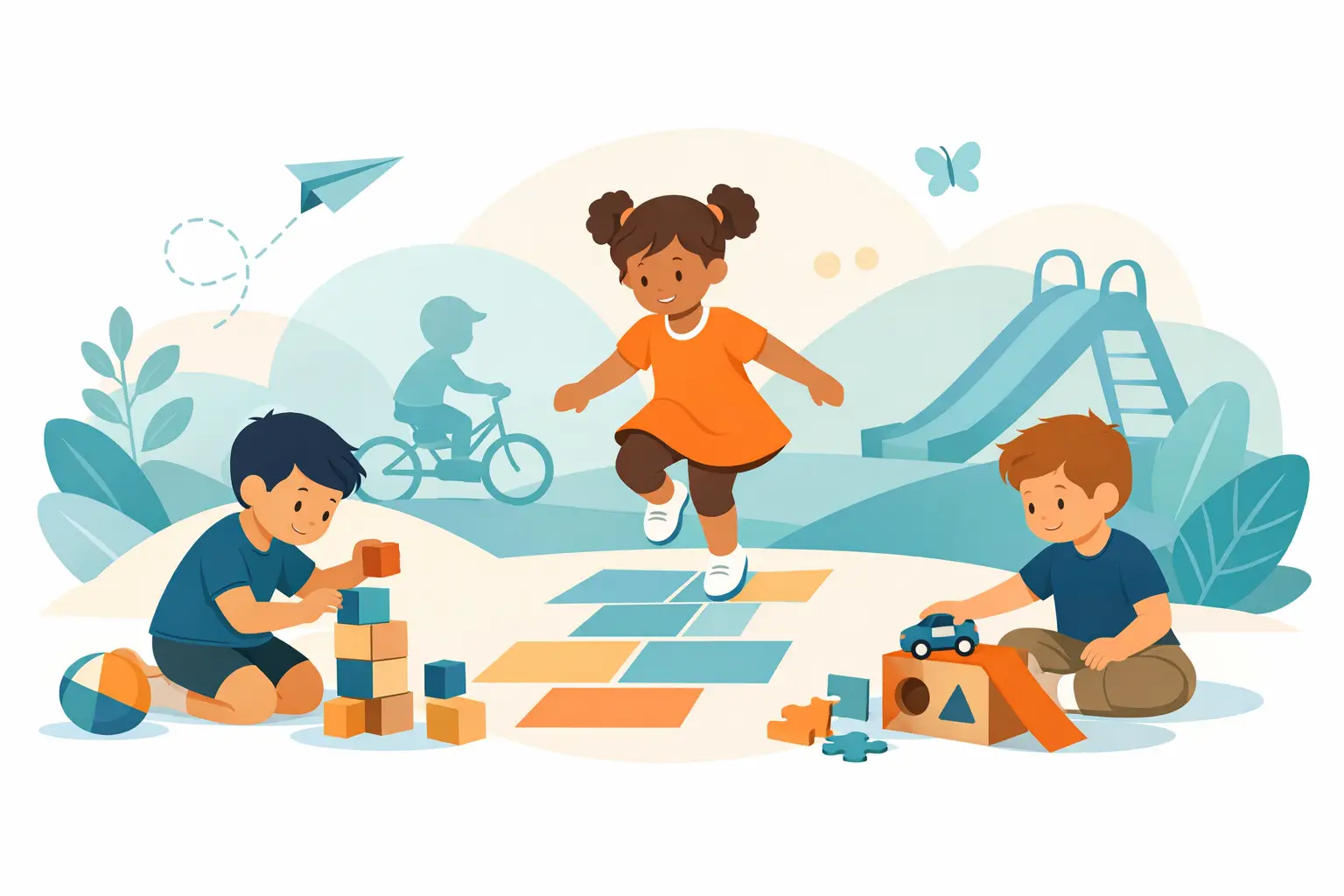
Purposeful play sits in that sweet spot. It gives children a clear movement challenge, but it keeps the experience light and age-appropriate. Rolling a ball toward a target, stepping over markers, swinging at a soft object, or balancing while reaching all build motor control without making a child feel corrected at every turn.
This matters because pressure can slow progress. If a child feels watched, judged, or pushed beyond their readiness, they may shut down or avoid trying. On the other hand, when a child feels safe and supported, they are more willing to repeat movements, adjust naturally, and build skill through experience.
There is also an important trade-off here. Completely free play has value because it encourages creativity and independence. Structured activities have value because they help children practice specific patterns and skills. The best approach for early childhood usually includes both. A child benefits from room to explore, but they also thrive when a caring adult creates simple, intentional movement experiences.
How parent involvement supports motor growth
For preschoolers, parent participation can make a major difference. Not because a parent needs to be a coach, but because a young child learns best with trust nearby.
When a parent joins an activity, the child often feels more secure, more focused, and more willing to try something new. A child who hesitates to jump, swing, or toss may attempt it once mom or dad models it first. That shared experience also turns movement into connection rather than performance.
Parent involvement helps in practical ways too. Young children need reminders to take turns, reset their bodies, and try again after frustration. They also respond to familiar encouragement. A calm, specific comment like, "Nice balance" or "You kept your eyes on the ball" is often more helpful than broad praise alone.
This is one reason parent-child programs can be so effective during the early years. They support child motor skills development while strengthening the relationship around learning itself. The child is not being dropped into a skill-building environment alone. They are growing with someone they trust.
The movement skills that matter most in ages 2 to 5
Parents sometimes wonder whether their child should already be catching, swinging, hopping, or standing on one foot. The honest answer is that development varies. Some children love movement right away. Others need more time, repetition, or encouragement.
Still, there are common building blocks worth paying attention to. Balance is one of the big ones. A child who can steady their body during simple tasks is better prepared for almost every other movement. Coordination is another. This includes crossing the midline, using both sides of the body together, and timing actions with the eyes and hands.
Core strength matters more than many parents realize. When a child has a stable trunk, they can rotate, reach, swing, and stop with more control. Rhythm also plays a role. Repeated movement patterns help children understand timing, sequence, and pace.
Then there is body awareness, which is easy to overlook. Children need to learn where their body is in space. They need to sense how far to reach, when to slow down, and how much force to use. That kind of awareness does not usually come from screens or sedentary routines. It grows from active, hands-on experience.
Why golf-style activities can help child motor skills development
When introduced in an age-appropriate way, golf-style play can support a wide range of developmental skills. The benefit is not just about learning to swing a club. It is about what the child must do before, during, and after that swing.
A simple golf activity might ask a child to carry equipment, place a ball, adjust their stance, focus on a target, swing with control, and follow through. Even that basic sequence builds coordination, balance, spatial awareness, and attention. If the activity includes walking to stations, picking up objects, or aiming toward colorful targets, it becomes even richer from a development standpoint.
Of course, it depends on how the activity is taught. If golf is presented too technically or too early, it can become frustrating. Young children are not miniature adults. They need scaled equipment, short activity windows, and lots of success moments. The goal at this age is not polished form. It is confident movement.
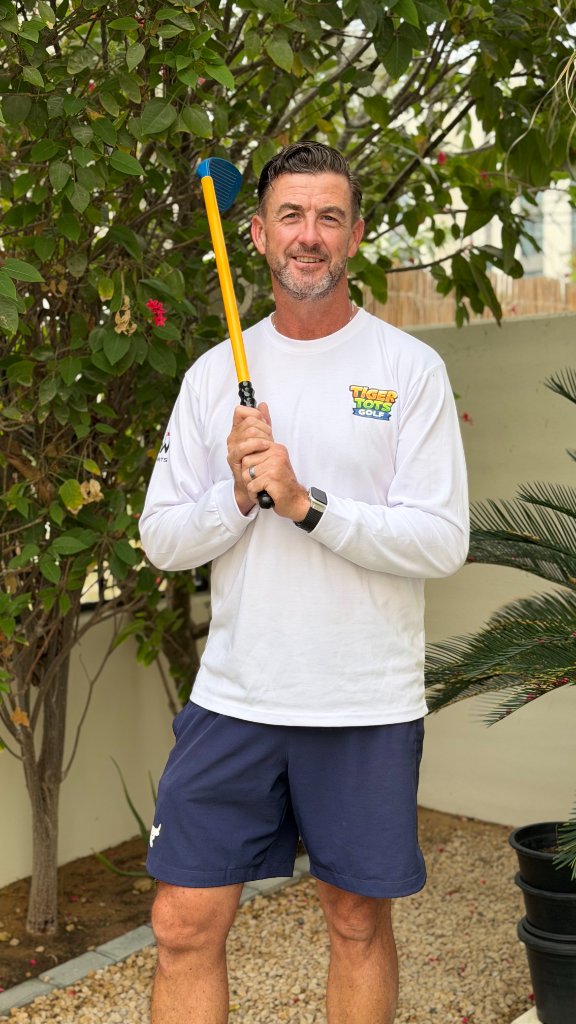
That is where a structured, development-led approach matters. Programs like TigerTOTS Golf focus on purposeful play first, using golf-inspired activities as a fun way to strengthen the underlying skills children need in sport and in everyday life.
What parents can do at home
You do not need a full sports setup to support your child. Some of the best movement practice happens in short, simple moments at home or outdoors.
Try setting up playful challenges that involve reaching, carrying, rolling, tapping, or aiming. Let your child walk along a line, step over objects, toss soft balls into buckets, or gently tap a ball toward a target. These activities may look simple, but they ask the body to organize movement in meaningful ways.
Keep expectations realistic. A two-year-old may only stay with an activity for a few minutes. A four- or five-year-old may be ready for a bit more sequence and repetition. If your child loses interest, that does not mean the activity failed. It may just mean they have reached their limit for that moment.
The quality of the experience matters more than the length. Short, positive practice tends to work better than stretching an activity until a child is tired or frustrated.
Signs of healthy progress
Progress in motor development is not always dramatic. Sometimes it looks like a child needing fewer reminders to balance. Sometimes it is a stronger grip, smoother turning, better timing, or more willingness to try.
Confidence is a sign worth noticing. A child who once held back may begin stepping forward more quickly. They may recover from mistakes with less frustration. They may start saying, "Watch me," which often signals growing comfort in their own body.
At the same time, every child develops at a different pace. Some need extra repetition. Some benefit from smaller group settings or one-on-one guidance. If a parent has concerns about significant delays or unusual difficulty with movement, it is wise to speak with a pediatric professional. Support works best when it comes early and without shame.
The goal is not to raise the most advanced athlete in the room. It is to help a child feel capable, coordinated, and eager to participate. Those early experiences shape how children see movement for years to come.
When movement is introduced with warmth, structure, and play, children gain more than a new skill. They build trust in their own bodies. And that confidence tends to carry far beyond the activity itself.