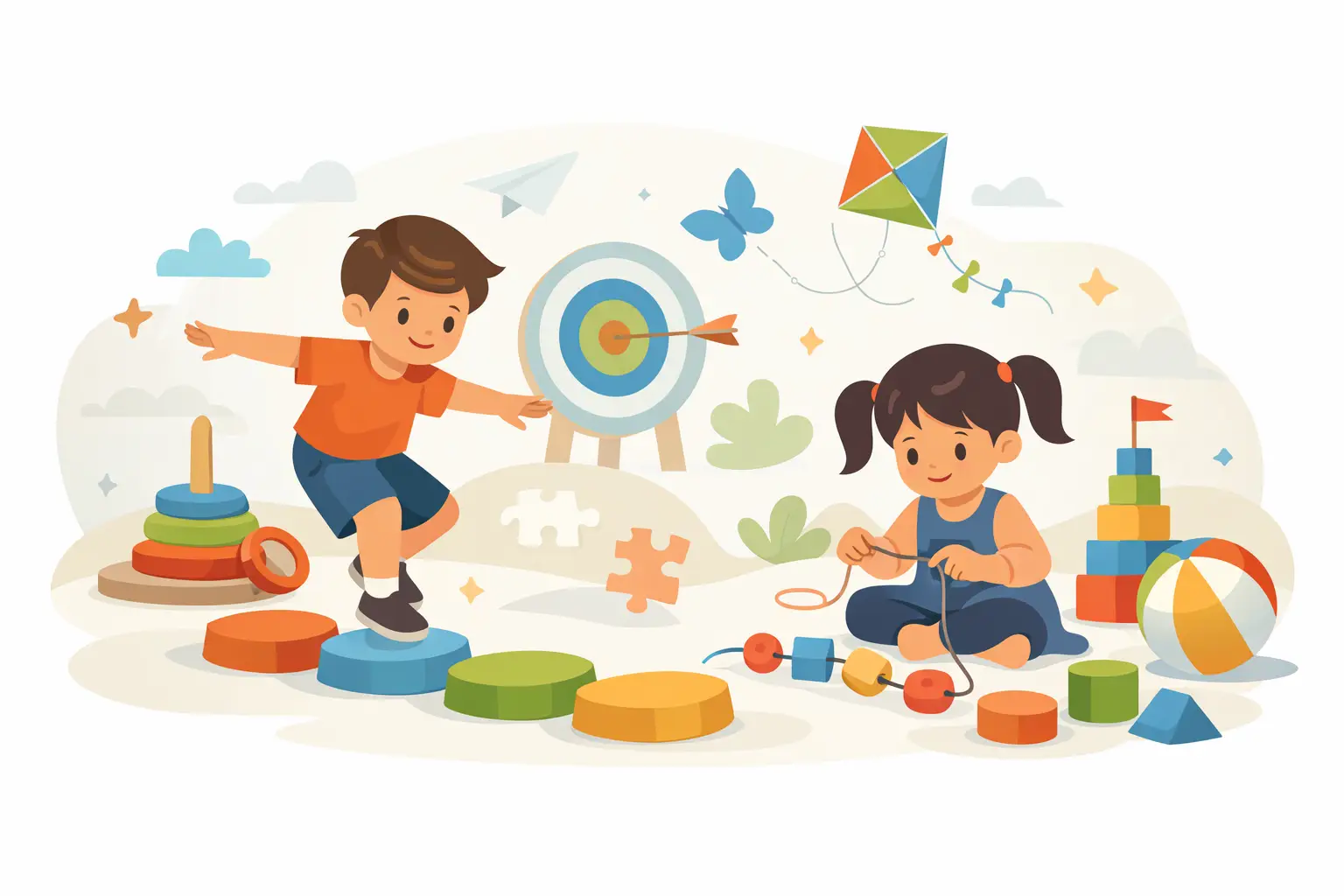
A preschooler does not need a complicated workout to build strong movement skills. They need a target to aim for, a line to follow, a soft ball to chase, and an adult who notices their effort. When parents look for the best motor skills games preschoolers can enjoy, the most helpful choices make movement feel like play while quietly practicing balance, coordination, strength, and confidence.
At ages 2 to 5, children are learning what their bodies can do. A game that asks them to roll, reach, step, toss, or swing gives them useful information: how hard to push, where their feet are, and what happens when they try again. The goal is not perfect form. It is a happy child who feels safe taking part.
Why Motor Skills Games Matter in the Preschool Years
Motor skills are the movements children use every day. Gross motor skills involve larger actions, such as running, jumping, climbing, and balancing. Fine motor skills use smaller muscles in the hands and fingers for tasks such as grasping, placing, pinching, and turning.
The two often work together. When a child sets up a ball, grips a child-sized club, and swings toward a target, they are using their hands, eyes, core, feet, and attention at once. That is why purposeful play can be so valuable. It gives children a reason to move, rather than asking them to repeat an exercise with no story or goal.
Short, repeatable games also support emotional growth. Preschoolers learn to wait briefly, cope when a ball misses the target, celebrate someone else’s turn, and try a new approach. Those are meaningful wins, especially when the grown-up beside them keeps the mood calm and encouraging.
12 Best Motor Skills Games for Preschoolers
Choose two or three games at a time rather than trying to create a full activity circuit. Ten to fifteen minutes of engaged play is plenty for many preschoolers. Stop while your child is still enjoying it, and return another day.
- Animal trail: Place a few pillows, taped lines, or safe household objects across an open space. Invite your child to move through the trail like different animals: bear crawl, bunny hop, flamingo balance, or slow turtle walk. Changing movement patterns develops body awareness and makes balancing practice much more fun.
- Roll to the target: Set a laundry basket, large cup, or simple floor marker a few feet away. Your child rolls a soft ball toward it, then gradually tries different distances. Rolling is a wonderful early skill because it teaches force and direction without requiring the timing of an overhand throw.
- Color path hops: Arrange colored paper squares or small floor markers in a simple path. Call out a color for your child to step on, hop to, or tiptoe toward. This combines listening, movement planning, and balance. For younger children, walking from color to color is a great starting point.
- Sock-ball toss: Roll socks into soft balls and use a basket, box, or bucket as a target. Begin close enough that success is likely, then move the target farther away only when your child is ready. Tossing builds hand-eye coordination, but the real motivation comes from hearing that satisfying soft thump in the basket.
- Tape-line balance walk: Use painter’s tape to make a straight line, a gentle curve, or a zigzag on the floor. Ask your child to walk heel-to-toe if they can, or simply keep their feet on the line. Add simple variations, such as carrying a soft toy or walking backward with a hand nearby for support.
- Balloon keep-up: A balloon moves slowly enough for preschoolers to track and reach for successfully. Challenge your child to keep it off the floor using hands, elbows, knees, or a lightweight paddle. Clear the surrounding area first, and choose a different game if balloons are not appropriate for your family’s safety needs.
- Treasure pickup relay: Scatter beanbags, stuffed animals, or large blocks around a room. Your child picks up one item at a time and carries it back to a “treasure chest.” Add movement prompts such as walking on tiptoes, taking giant steps, or carrying the item with two hands. This encourages squatting, lifting, carrying, and controlled walking.
- Beanbag balance delivery: Place a beanbag or small soft toy on your child’s head, shoulder, or outstretched hand and ask them to deliver it to a nearby spot. The game is delightfully tricky, which is exactly why children often want another turn. Keep the route short and celebrate their careful steps rather than how long the object stays balanced.
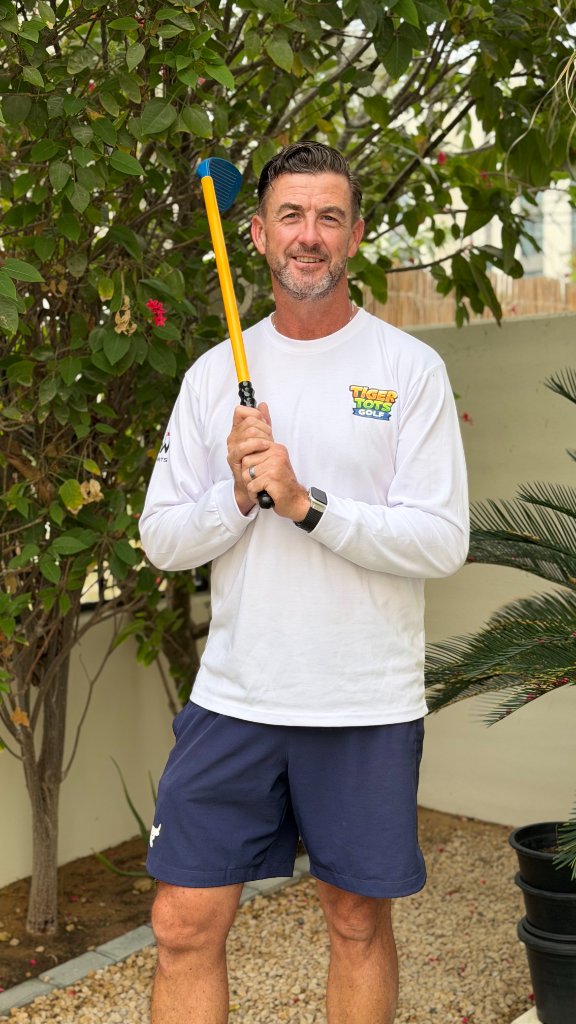
- Mini golf pathways: Create a wide target using cups, blocks, or a taped square. Your child can push or gently tap a soft ball toward it with a toy club, a cardboard tube, or even their hand. This builds visual tracking, bilateral coordination, and control of force. At TigerTOTS Golf, this type of age-appropriate play is used to introduce movement foundations before children are expected to understand technical golf skills.
- Shape jump and land: Put paper circles, squares, or triangles on the ground with plenty of space between them. Ask your child to jump from one shape to another and “freeze” when they land. The freeze is important: it helps children notice where their body is and practice landing with control.
- Scarf catch: Toss a lightweight scarf into the air and let your child catch it before it lands. Scarves fall slowly, giving little hands and eyes time to work together. Try catching with two hands first, then ask your child to catch after one clap or while standing on a chosen color spot.
- Build and knock down: Let your child stack lightweight cups, foam blocks, or empty plastic containers, then roll a ball to knock them down. Building supports grasp and placement; rolling adds aim and force control. It also includes a built-in reset, so children can take turns building the next target with you.
How to Make the Games Developmentally Right
The best game is not necessarily the one that looks most impressive. It is the one that offers your child a reachable challenge. If a child becomes frustrated after several attempts, make the target bigger, bring it closer, slow the movement down, or join in as a partner. A quick adjustment can turn “I can’t” into “Let me try again.”
Give one clear direction at a time. “Roll the ball to the basket” is easier to process than a long explanation about stance, hands, and aiming. Demonstrate first, then let your child find their own way of moving. Preschoolers learn through repetition, but they also need room to experiment.
Safety matters, particularly with active games. Use soft equipment, create a clear play space, and stay close during balance, climbing, or swinging activities. Avoid turning practice into a test. If your child wants to repeat the easiest version, that still counts as valuable learning. Repetition helps movement feel familiar and secure.
The Parent’s Role: Encourage, Don’t Correct Every Move
Parent participation can make a simple game feel special. Your child is more likely to stay engaged when you roll a ball back, take a turn on the tape line, or react warmly to their creative ideas. Try comments that describe effort: “You watched the ball all the way to the basket,” or “You kept your balance on that turn.”
Praise that is specific helps children understand what they did well. It also reduces the pressure to be the fastest or most accurate. If they miss, respond with curiosity: “That one went a little wide. Should we try from closer?” This keeps the focus on problem-solving instead of performance.
You do not need to schedule every minute of play. Keep a few simple items available - soft balls, beanbags, painter’s tape, cups, and scarves - and use them when your child has energy to move. A familiar game after preschool, before dinner, or during a weekend morning can become a small family ritual.
The real value of these moments is not a perfectly straight tape-line walk or a ball that always reaches the target. It is the look on your child’s face when they realize, through one more playful try, that their body can do something new.