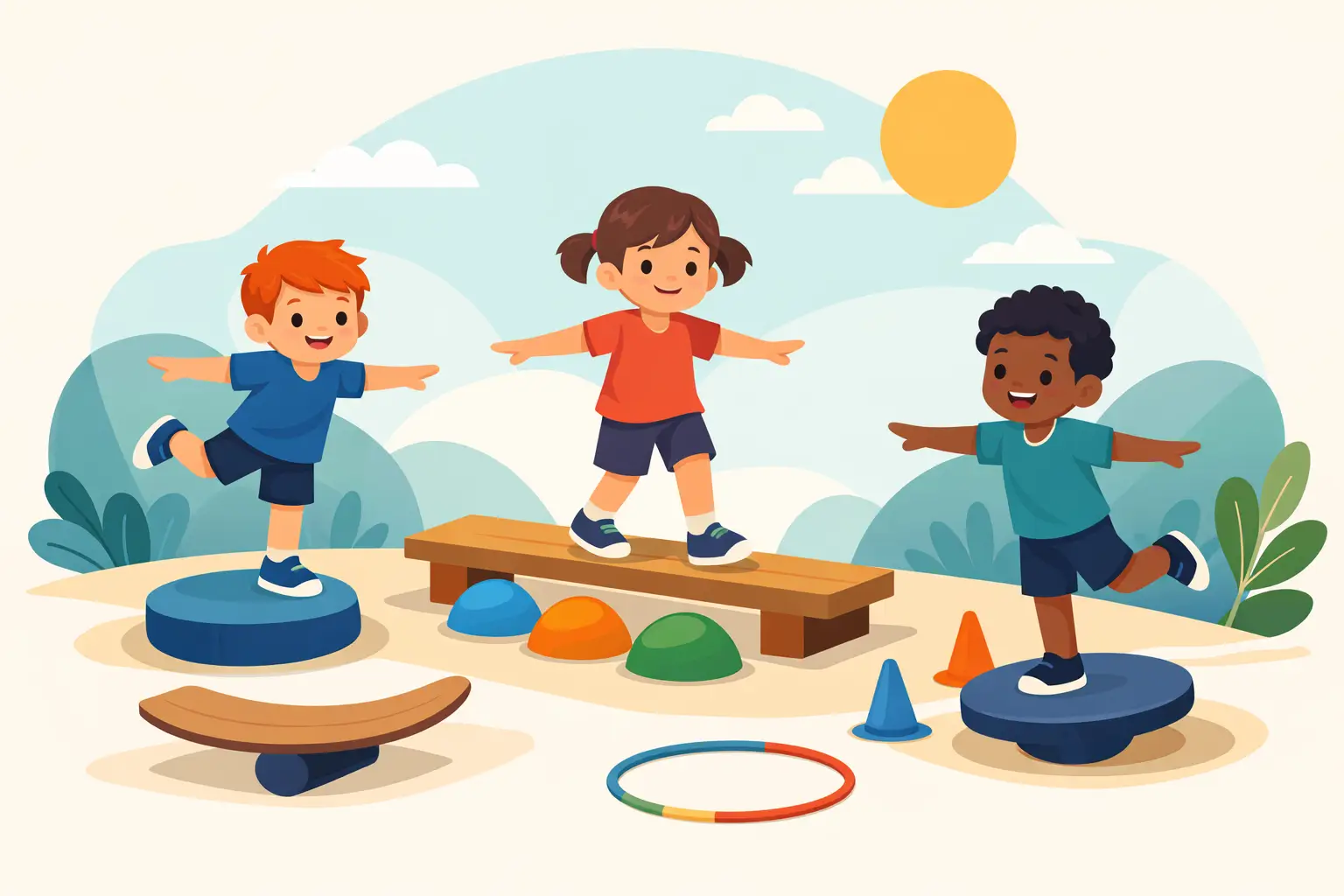
A strip of painter's tape can become a bridge, a stuffed animal can become a treasure, and a few minutes of focused play can give a young child a powerful message: “My body can do hard things.” Balance games for preschoolers turn ordinary movement into small, achievable wins. For children ages 2 to 5, those wins help build coordination, body awareness, confidence, and the willingness to try again when a wobble happens.
At this age, balance is not about standing perfectly still or performing a skill on command. It is about learning how to shift weight, stop and start safely, use both sides of the body, and recover when something feels unsteady. The best games keep that learning light, playful, and shared with a parent.
Why Balance Games for Preschoolers Matter
Preschoolers are still learning where their bodies are in space. When they step over a pillow, walk along a taped line, or pause on one foot, they are practicing the foundation for many everyday activities. Climbing stairs, running with friends, sitting at a table, kicking a ball, and later holding a golf club all rely on developing balance and coordination.
Balance play also supports emotional growth. A child who hears, “You caught yourself - try one more step,” begins to connect effort with progress. That is more valuable than asking them to finish a course perfectly. Children build confidence when the challenge is just right: interesting enough to require focus, but manageable enough to create success.
The parent-child element matters, too. Your child may be more willing to try a new movement when you demonstrate it first, hold a hand nearby, or celebrate a careful landing. You do not need to coach every step. Often, your calm attention is the encouragement that helps a child keep going.
How to Make Balance Play Feel Like Play
Keep each activity short. Five to 10 minutes is plenty for most preschoolers, especially when a game requires concentration. Choose a clear goal, such as carrying a beanbag to a basket or reaching the end of a taped path, then let your child repeat it if they are enjoying it.
Use simple language: “Slow feet,” “eyes forward,” “arms out wide,” or “freeze like a statue.” Avoid correcting every wobble. Wobbling is useful information for a growing body. If a game becomes frustrating, make the path wider, lower the challenge, or join in beside your child.
8 Balance Games for Preschoolers to Try
1. Tape Line Adventure
Place a long line of painter's tape on a carpet or smooth indoor floor. Invite your child to walk along it as if they are crossing a river, heading to a treasure chest, or following a friendly animal trail. Start with regular steps, then try heel-to-toe steps only if your child is ready.
For a child who needs more support, make the line wider with two strips of tape. For a bigger challenge, add gentle curves or ask them to carry a small soft toy as they walk. The goal is controlled movement, not staying perfectly on the line.
2. Pillow Path
Arrange firm couch cushions or flat pillows on the floor with small spaces between them. Your child can step from “island” to “island” without touching the “water.” This activity invites them to adjust their feet and body as surfaces change slightly under them.
Stay close, especially with younger preschoolers, and keep the pillows low and stable. Rather than making the gaps large, vary the story: perhaps each island is a different color, animal habitat, or stop on a family adventure.
3. Freeze and Find
Play music or clap a steady beat while your child walks, marches, or dances around an open area. When the sound stops, call out “freeze,” and both of you hold a balance pose. Begin with two feet on the floor, then offer choices such as arms wide, hands on hips, or one foot lightly lifted.
This game builds balance alongside listening and self-control. If one-foot poses feel too difficult, let your child place one toe behind the other foot instead. A successful freeze lasts only a few seconds.
4. Animal Balance Walks
Ask your child to travel like an animal: a flamingo standing on one foot, a bear walking on hands and feet, a penguin taking tiny steps, or a stork moving slowly with knees high. Animal play gives children an imaginative reason to experiment with different movement patterns.
Choose two or three animals at a time so the game does not become overwhelming. You can make it more engaging by placing a stuffed animal at the finish line and asking, “Which animal can bring a greeting to our friend?”
5. Beanbag Delivery
Set a basket, bucket, or laundry bin a few steps away. Have your child balance a beanbag, rolled-up sock, or small soft toy on their head, shoulder, open palm, or a tray held with two hands, then deliver it to the basket.
A head balance can be fun, but it is not necessary. Carrying an object slowly while watching where they step is already excellent practice. If the item falls, treat it as part of the game: “The package needs another delivery!”
6. Stepping-Stone Colors
Place paper plates, non-slip floor markers, or colored sheets of paper across an open floor. Call out a color for your child to step on, then add a movement such as “blue with two feet” or “yellow, then freeze.” This combines balance with color recognition and following directions.
Keep the stepping stones close together at first. As your child gains confidence, invite them to step sideways, backward with your hand nearby, or from one stone to the next while holding a favorite toy.
7. Balloon Keep-Up Walk
Give your child a balloon and ask them to tap it gently into the air while walking along a simple path. The slow, floating movement of a balloon encourages children to look up, adjust their steps, and coordinate their hands and feet.
This is best in a clear indoor space, away from lamps and sharp corners. A lightweight scarf can work well, too, and it moves even more slowly for younger children who need extra time to respond.
8. Little Golfer Target Trail
Create a short path with a few floor markers, then place a soft ball at the end. Your child can walk the path, stop with both feet planted, and gently roll or tap the ball toward a target using their hand or a child-safe club. The movement sequence matters: travel, stop, aim, and send the ball.
This is a natural way to introduce the body control behind golf without expecting a preschooler to learn a formal swing. At TigerTOTS Golf, purposeful activities like these help children experience golf as a confidence-building movement journey, with parents actively involved in each small step.
Adjust the Challenge to Your Child
The same game can look very different for a 2-year-old and a confident 5-year-old. Younger children often benefit from wider paths, two-foot stops, and a parent's hand close by. Older preschoolers may enjoy following a sequence, carrying an object, or completing a gentle obstacle course.
Watch for signs that the activity is at the right level. Your child should need to focus, but they should still smile, talk, or want another turn. If they are rushing, simplify the goal and encourage slower movements. If they are bored, add a story, a target, or a new way to travel.
Keep Balance Games Safe and Encouraging
Set up on a clear, flat surface and use soft, low equipment. Avoid elevated beams, slippery socks, or furniture climbing for balance practice. Bare feet or secure shoes usually provide better grip than loose slippers.
Stay within arm's reach when a child is trying something new, but give them room to do the movement themselves. Praise specific effort instead of labeling ability. “You kept your arms wide when the pillow moved” tells your child what worked and makes success easier to repeat.
Most of all, let the game end while it is still enjoyable. A child does not need a long session to learn. One careful walk across a tape line, one proud frozen pose, and one cheerful try after a wobble can become the kind of purposeful play that strengthens skills far beyond the living room.